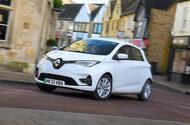
After 12 years in production, the Zoe still looks fresh
Renault’s seminal EV hatchback ends production today. Here’s why we’ll miss it
Cars die quietly. Their ‘look’ lasts six or seven years with mid-life changes, while their underbits generally go twice as long because they’re by far the most expensive components to change.
Sales typically peak a couple of years before the end, and by the time the Grim Reaper arrives, the manufacturing company has long stopped talking about the outgoing model and is well down the road with noise about its replacement.
So it is with the Zoe, Renault’s pioneering volume electric car. Production officially ceased on 30 March 2024 (though in reality it stopped well before Christmas), with about 400,000 units sold across Europe.
Renault has been publicising the Zoe’s replacement, officially called the Renault 5 E-Tech, since 2021 when it appeared as a concept to herald the all-change ‘Renaulution’ plan devised by its newly arrived CEO, Luca de Meo. We now know that closely related all-electric Renault 4 and Twingo models are waiting in the wings.
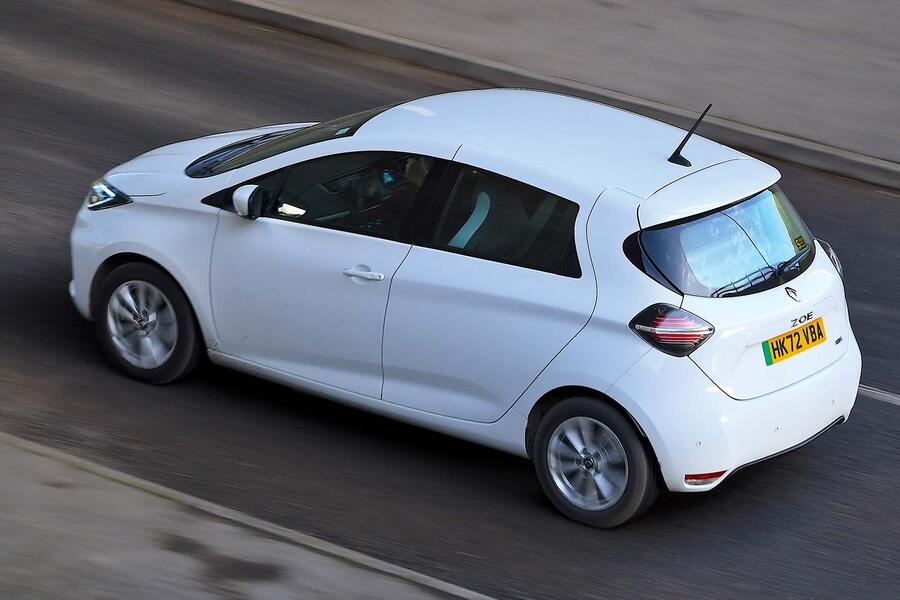
Yet in some ways, the Zoe, for all its rule-busting 12 years in production, doesn’t warrant replacement nearly as urgently as most outgoing models do. Several rounds of minor styling tweaks have maintained a modern look; they have almost been too successful. The Clio-related interior package remains generous in modern terms. And the Zoe is still one of the lighter and more compact small EVs available on the market.
True, that 1500kg kerb weight doesn’t exactly make it a featherweight against outgoing petrol and diesel superminis (they weigh more like 1100-1200kg) but it’s a clear tonne lighter than the EV behemoths much of Europe’s motor industry has been encouraging us to buy.
At more than twice the price, they’re much more profitable to sell, even though for many they’re too expensive, less agile and needlessly vast. And they leave room for the much-feared cheap Asian imports.
Here, however, is where the logic ends and emotion steps in. I’ve admired the Zoe ever since I first saw it as a concept in 2009, and especially after I started driving it three or four years later.

To me, the Zoe has been a pioneer in bringing simplicity and practicality to EV driving and ownership – and it has married these things to the unique design appeal Renault has brought to practically every one of its low-end, high-volume cars that I can remember.
Those who cook up ‘best EV’ comparison tests – in other quarters than Autocar – have tended to treat the Zoe as an also-ran because it has lasted for so long. But as its demise loomed, I became convinced it needed a proper send-off, so I arranged to borrow one from Renault UK, which has put around 30,000 of them on Britain’s roads and for a couple of years around 2015 made it the country’s best-selling EV, despite the efforts of the British-built, all-electric Nissan Leaf.
The car I borrowed was an R110, the numerals denoting the power in metric horsepower (actually 109bhp). It didn’t have either the most powerful motor – that applies to the post-2019 R135 – or the biggest, 52kWh battery, but I soon discovered that such details hardly mattered for the use to which our household was to put the car.

The Zoe taught us a family lesson about EVs that I believe will last the next three to five years. For people like us, who live in a semi-rural situation 100 miles from London but have strong connections there, the best EV is undoubtedly a compact runabout.
It can handle 90% of our driving – especially if you have a 7kW wall charger – but for the time being, you need a backstop ICE car. Said petrol-burner might do only 3000 miles a year, but its costs can be offset by savings on your home-charged EV and it offers protection against the lingering uncertainties and delays of EV charging in places you don’t know. Which remain real.
As many EV early adopters will tell you, electric cars tend to be taken into the family as a second car, and pretty soon become the first.
That’s what happened with our Zoe. It zipped back and forth to the station and local shops. It delivered people and picked them up. It went once to the local recycling centre with a bumper load of post-Christmas cardboard. It easily fitted the nearest supermarket car park. With zero fuss, it carried out the 50- to 70-mile out-and-back journeys across the Cotswolds that are part of life for me and my family.
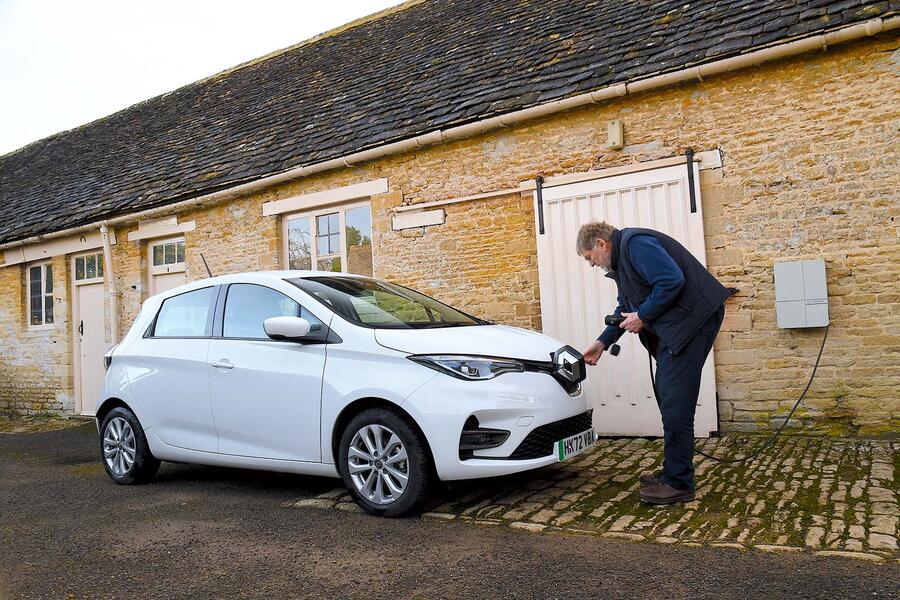
Our wall charger and the Zoe’s four miles per kWh (roughly double that of my Audi SQ8 E-tron long-term test car) made its costs seem negligible. And most of our motoring was of the zero-emissions variety.
There’s more. Though the essential design has been in production 12 years, a recent Zoe feels entirely modern with its LED lights, automatic dipping, automatic wipers, automatic locking and thoroughly decent phone-connected audio and nav systems.
Best of all, it’s fun to drive. The ride is fairly soft and nicely damped in a way that brings faint hints of nostalgia to someone who drove a lot of blancmange-like everyman Renaults back in the day, but nowadays you can pitch your Zoe into roundabouts without either the body roll or the tyre-screeching understeer.
As with other EVs, despite its modest peak power, there’s surprising torque to slingshot you off the mark, without all of that clutch and gear-change nonsense. It’s simple, clean, efficient, quick and quiet.
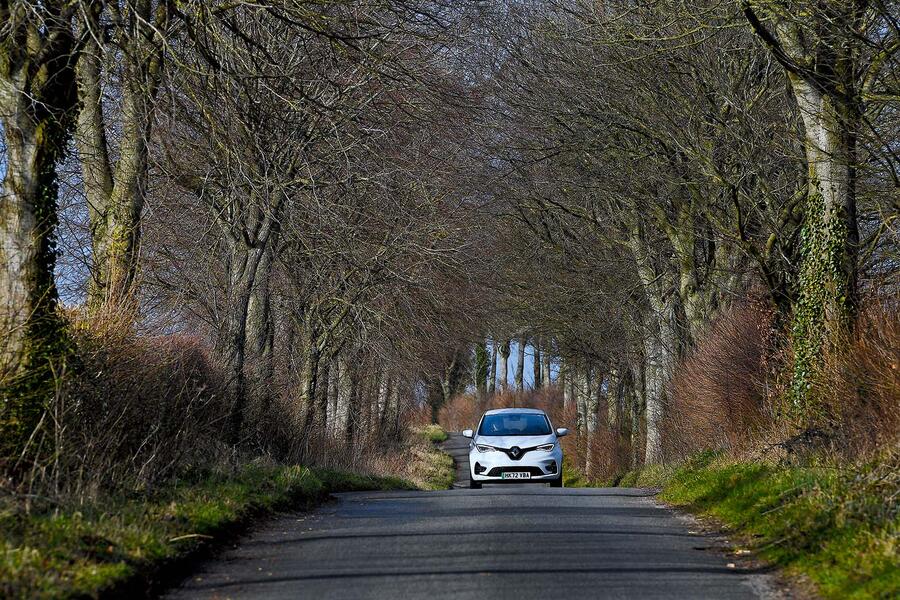
Cars leave my place all the time. Even if a car has a big price and a big name, you pretty soon become inured to any sense of loss. Sometimes you’re secretly pleased to see a big-name car go, if you’ve avoided kerbing the wheels and nobody’s swiped it on your watch and bunged it in a container bound for Africa.
But with the Zoe, we were all so sorry to see it go. We practically stood on the doorstep and waved it goodbye.
As it rolled away down the street, I had this crazy thought: was it really too late to drop an “Are you sure about this, Luca?” email to CEO de Meo, asking for a stay of execution for a Renault of rare excellence? It was nonsense, of course. It’s years too late.
Renault’s detailed model succession plans have been in place for three years, maybe longer. But I still choose to think that having such a fleeting and cockeyed Zoe plan, even for a second, shows the mettle of the model.
Commercials Cooperation Advertisements:
(1) IT Teacher IT Freelance

立刻註冊及報名電腦補習課程吧!
电子计算机 -教育 -IT 電腦班” ( IT電腦補習 ) 提供一個方便的电子计算机 教育平台, 為大家配對信息技术, 電腦 老師, IT freelance 和 programming expert. 讓大家方便地就能找到合適的電腦補習, 電腦班, 家教, 私人老師.
We are a education and information platform which you can find a IT private tutorial teacher or freelance.
Also we provide different information about information technology, Computer, programming, mobile, Android, apple, game, movie, anime, animation…
(2) ITSec

www.ITSeceu.uk
Secure Your Computers from Cyber Threats and mitigate risks with professional services to defend Hackers.
ITSec provide IT Security and Compliance Services, including IT Compliance Services, Risk Assessment, IT Audit, Security Assessment and Audit, ISO 27001 Consulting and Certification, GDPR Compliance Services, Privacy Impact Assessment (PIA), Penetration test, Ethical Hacking, Vulnerabilities scan, IT Consulting, Data Privacy Consulting, Data Protection Services, Information Security Consulting, Cyber Security Consulting, Network Security Audit, Security Awareness Training.
Contact us right away.
Email (Prefer using email to contact us):
SalesExecutive@ITSec.vip