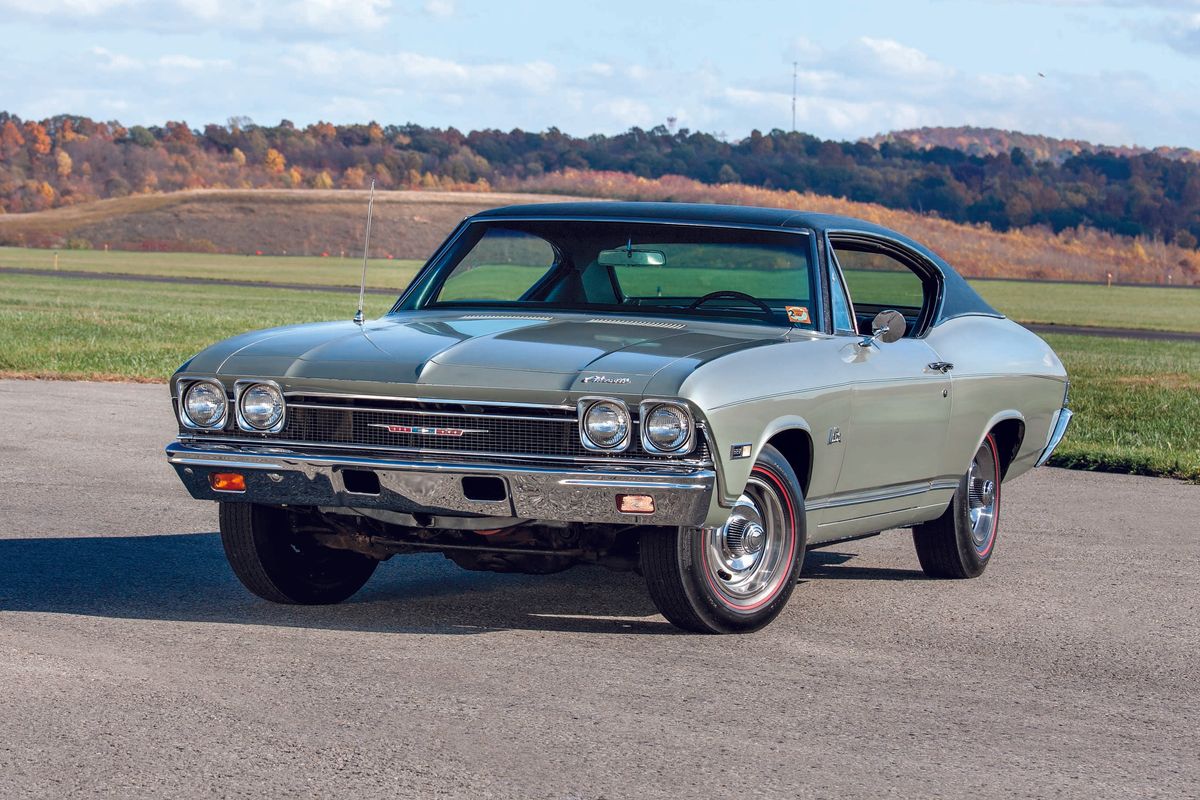
During the heart of the original musclecar era, the vast wealth of steadily escalating high-performance offerings meant that some of the day’s otherwise appealing hardware could become overshadowed. Chevrolet’s hot L79-code 327 engine serves as an excellent example. When Chevy made the Corvette-derived 350-hp small-block available in some of its more mainstream models, it created the potential for stout performers, but in the wake of a growing array of big-block options, relatively few buyers took notice.
Chevy had introduced the L79 version of the 327 for 1965, creating an interesting sort of “in-between” small-block offering for Corvette buyers. Previously, the lower-output 327 variants—the base 250-hp and optional 300-hp engines—had been relatively tame in their behavior, owing to mild hydraulic camshaft profiles that made for smooth idle quality and which worked well with automatic transmissions and/or air conditioning. Those seeking more serious performance from their Corvettes selected from the hotter solid-lifter versions, like the L76-code 365-hp 327, or even the 375-hp L84 that came topped with fuel injection.
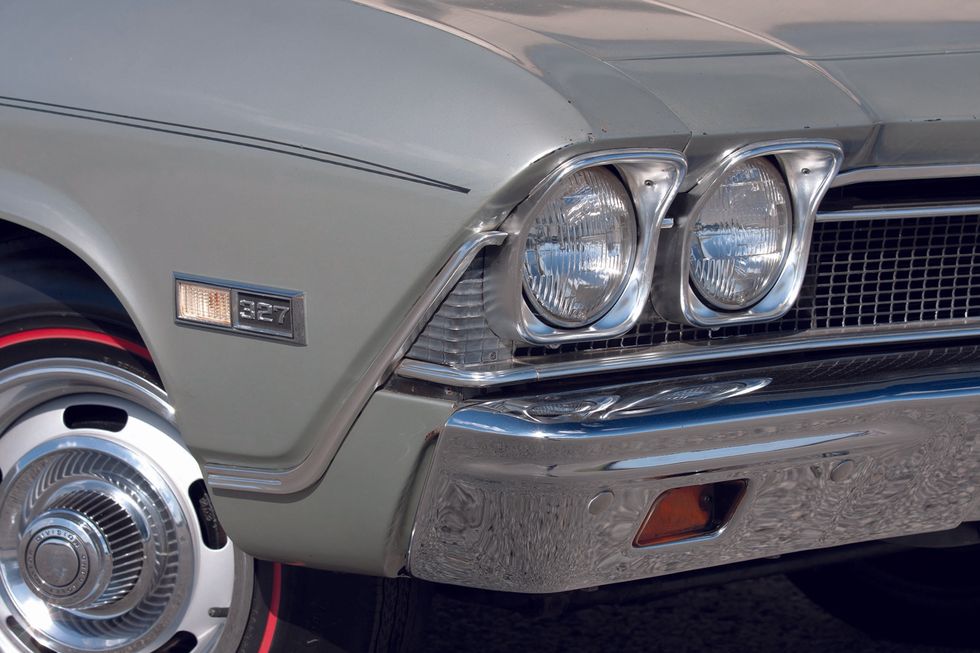
Photo: Thomas A. DeMauro
But the new L79 managed to bridge the gap, offering a stout 350-hp rating while using a hydraulic cam, albeit one with an aggressive profile. The L79 got the 64-cc chambered cylinder heads with the same 2.02/1.60-inch valves as the solid-lifter engines, and it even used an exotic aluminum intake manifold and a Holley carb at first; it also had domed pistons and 11.0:1 compression like the higher-output 327s. Yet, the L79 was a more tractable engine—enough so that you could even order A/C with it. You could not, however, pair the L79 with an automatic.
An interesting quirk was Chevrolet’s decision to offer this new small-block variation in the still relatively new Chevelle during that same model year of 1965. There were already two other 327s offered in the Chevelle for ’65, including one with a four-barrel rated at 300 hp. But for those wanting something a bit rowdier, the L79 was available, so long as you were willing to order a manual transmission. If you did check off the top 327, opening the hood of your new Chevelle would reveal a neat chrome-plated dual-snorkel air cleaner and “flash chrome” plated rocker covers, in addition to the aluminum intake and Holley four-barrel. Chevy would even let you order the L79 in a four-door sedan or a wagon.
The following year, however, the L79 was curiously absent from the Chevelle’s option sheet, with speculation suggesting that perhaps Chevrolet’s product planners thought offering a 350-hp 327 wouldn’t jibe well with the new, regular-production SS 396 and its base 325-hp engine. The better news was the availability of the L79 in the Chevy II, and this may be the engine’s best-known home outside of the Corvette.
For 1967, the L79 would lose its aluminum intake and Holley carb, using an iron manifold and a Quadrajet, and getting a new 325-hp rating. At a glance, the more pedestrian induction setup might be seen as the reason for the power decrease, but in reality, the Q-Jet was rated at 750 cfm while the Holley’s rating was just 585 cfm. Enthusiasts generally agree that the re-rated L79 ran just as well, and it’s often felt that, since the option returned to the Chevelle in ’67, perhaps this was a numbers game, as the base SS 396 was still rated for 325 hp too. For ’67, the hot L79 Chevy II would essentially disappear (six are said to have been built). In the Corvette, however, it was business as usual, as the L79’s 350-hp rating remained.
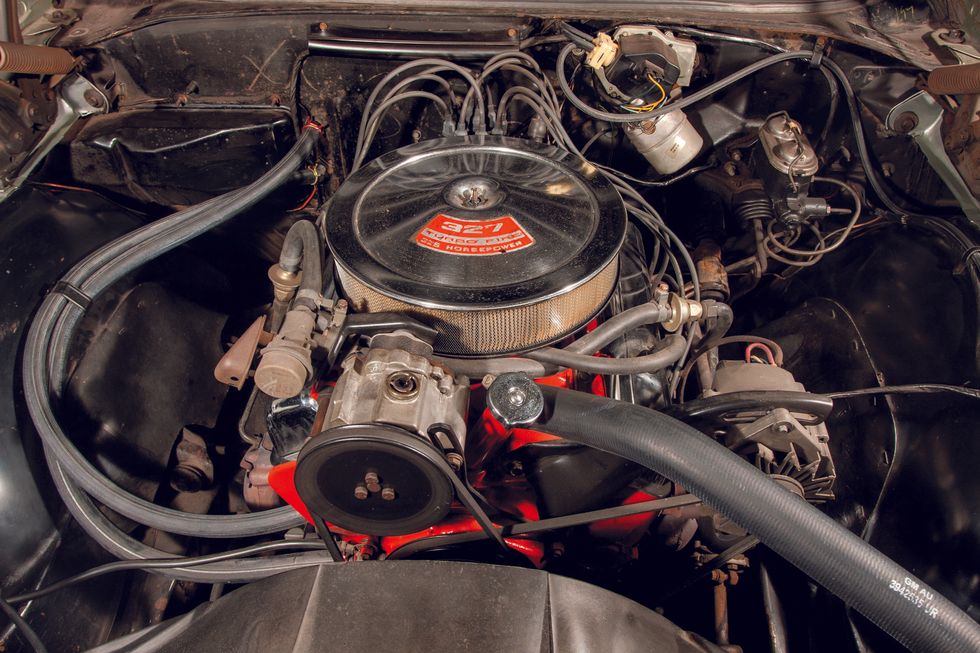
Photo: Thomas A. DeMauro
Things were happening at Chevrolet for 1968, with a complete restyling of both the Chevelle and the Chevy II Nova, and the L79 was available in both revamped models, again with a 325-hp rating. But the muscle car wars were in full swing by this time, and big-blocks were de rigueur; in fact, GM’s own restrictions limiting engine displacement to 400 cubic inches for intermediates and compacts was already putting the automaker at a disadvantage to its crosstown rivals, who were offering 440-powered GTX and Coronets and 427-urged Fairlanes.
This naturally meant that demand for the little L79 was on the wane as performance buyers stepped right up to the 396 Super Sport Chevelles and Novas, with some lobbying for a 427 option. Still, there remained some gearheads who perferred a rev-happy small-block.
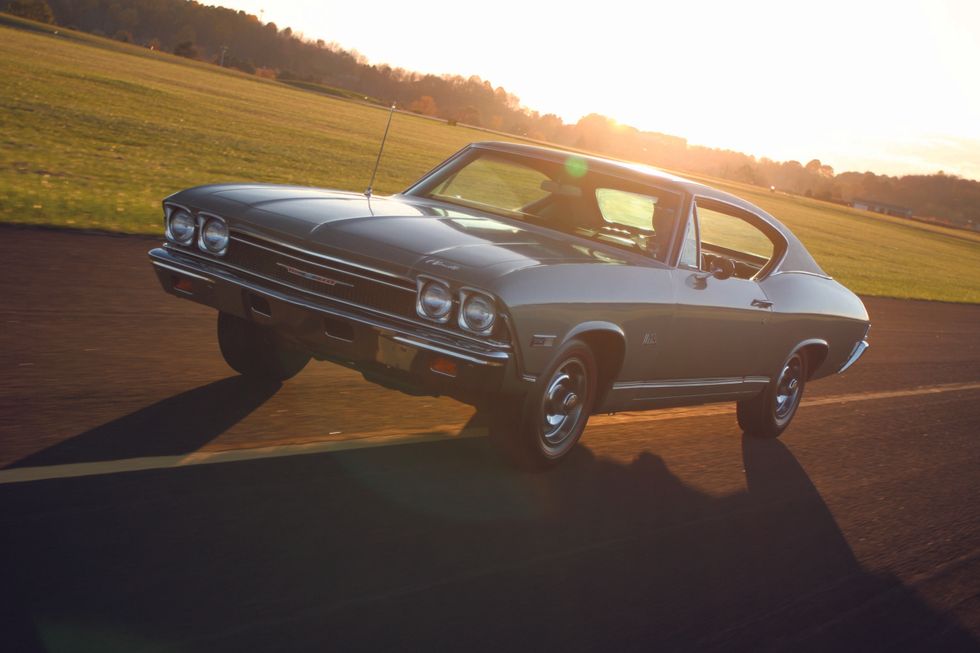
One of those people was the man who ordered this 1968 Chevelle Malibu Sport Coupe, though we don’t know exactly what his motives were. He even went to Don Yenko’s emporium of speed to special order his new Chevelle, so we can assume he was well aware of what else was possible, even beyond the factory order form. And our man wasn’t just looking for a little extra power—he also checked off the M21 close-ratio four-speed, M01 Heavy-Duty clutch, and 4.10 gears. Then he dressed the car up with bucket seats, floor console, simulated wood steering wheel, and rally wheels with redline tires. And then he parked it in his garage.
Sadly, we’ll never know just what the original owner’s intentions were, as he passed away many years ago—probably about a decade after taking delivery of his Chevelle. But when the car was discovered in that garage some years later, it showed just 3,600 miles—that’s right: three-thousand, six-hundred.
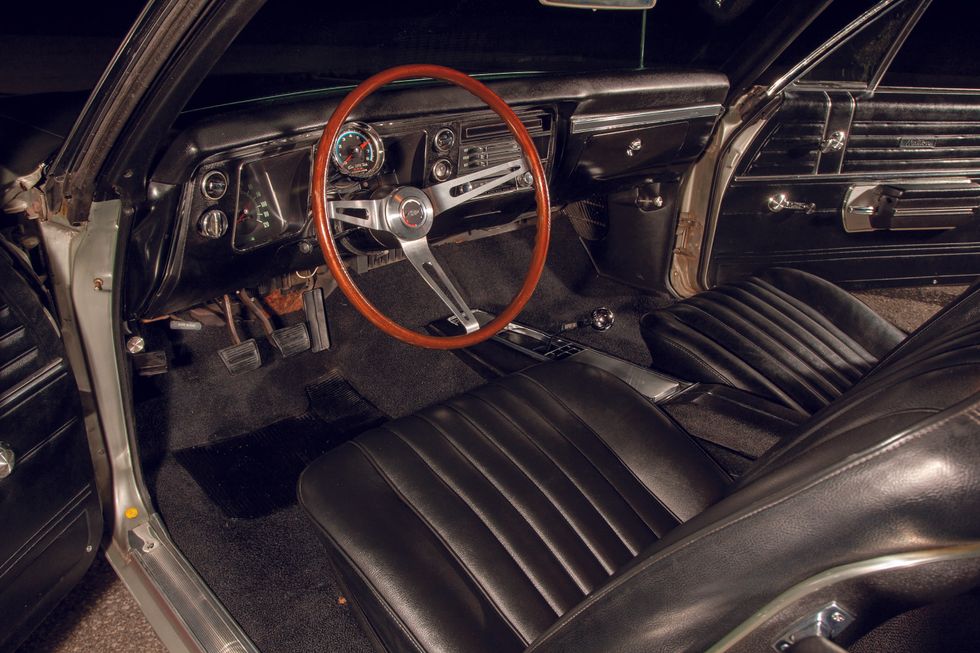
Photo: Thomas A. DeMauro
The next part of the story is the sort of thing most of us dream about: A guy goes to a garage sale in a neighbor’s backyard, looks over into garage, and sees an interesting old car languishing there. The homeowner explains that she is a widow, and that the car belonged to her late husband, and yes—she would be willing to sell it.
This was the tale told to Brian Henderson by the car’s second owner, after Brian spotted the Chevelle at a big car cruise in Pittsburgh, Pennsylvania. Brian runs Supercar Workshop in Latrobe, Pennsylvania, where top-tier Chevy muscle car restoration has been a specialty for nearly 30 years. “We were walking around, and I saw this car pull in. It was nice, and it sounded pretty good, but I could see it didn’t have the domed hood. I wondered right away if it was an L79,” Brian recalls of his first glimpse of the Chevelle. He managed to track down the owner, Fran Schanck, later that day, and that’s when he got the back story. Schanck was a “Chevelle guy” who was always on the hunt, so when his friend spotted the car at the garage sale, he knew who to call. Schanck didn’t hesitate, and acquired the car even before he realized what it really was, as Brian related.
“He said he was going to hot rod it—he thought it was just a clean Malibu. They didn’t even try to make it run since it had been sitting for years, but after he got it home, he started to realize just how original the car was. And then he discovered the L79 engine. From there, they decided to very carefully clean the car up and replace the dried-out parts of the fuel and brake systems, keeping everything they took off.”
Brian and Schanck talked more, and he showed Brian how the Chevelle’s trunk mat had fallen apart when he’d tried to remove it for cleaning. As a Chevy restoration expert, Brian knew where to get a concours-quality replacement, and from that bit of assistance came a lasting friendship. Years later, Brian would get a call from Schanck, who said that he was retiring, and that it was time for the car to find a new home. “He told me he was only going to make one call—to me—because he ‘didn’t want to put up with all the guys who are going to show up and complain about the scratches.’”
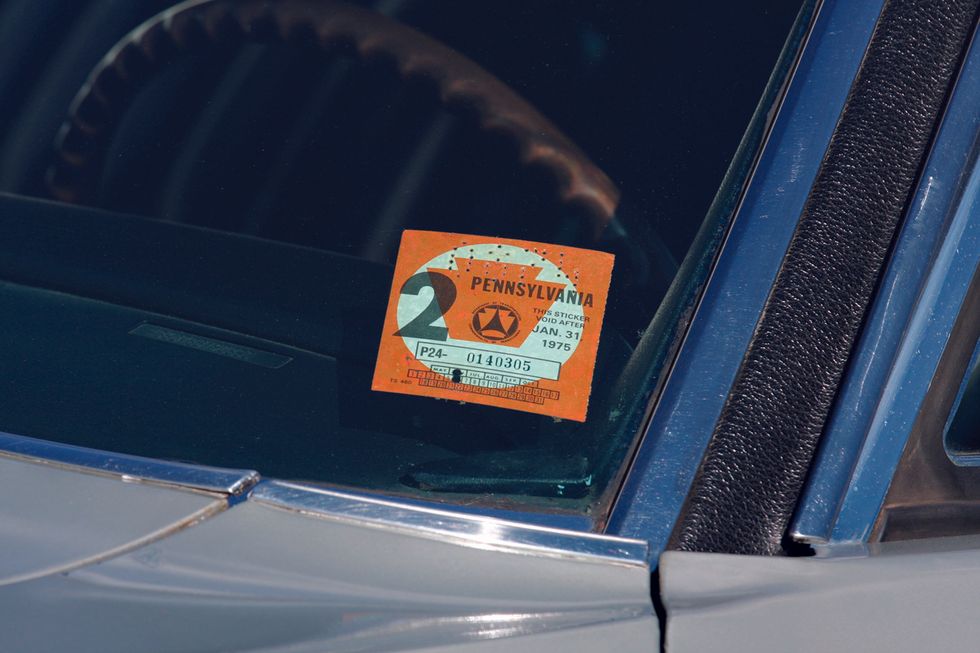
Photo: Thomas A. DeMauro
Those scratches were the minor blemishes the Chevelle wore on its otherwise excellent factory-applied paint. Brian knew the car was original and low mileage, but he didn’t yet know just how low.
“When we’d talked the time that we met, he’d said the car had ‘36’ when I asked the mileage—I assumed he meant 36,000. But when I went to really check the car out when he decided to sell, I started getting heart palpitations when I saw the odometer had just 4,100 miles showing!” Brian recalls. That was just the start.
“Then he pulled out the paperwork and he had everything—the sticker, the Protect-O-Plate… He even had the bill of sale with Don Yenko’s signature on it,” Brian says. The car just kept getting better the deeper he looked, and though he wasn’t in the market for another vintage Chevy, he knew he couldn’t pass this one up.
“I knew I’d never find another one like this, but I had to get some things together to make the deal first,” Brian recounts. “I was supposed to be finding a buyer, and when I got back to tell Fran that I had someone, and that it was me, he said he’d hoped that was what I was going to say.”
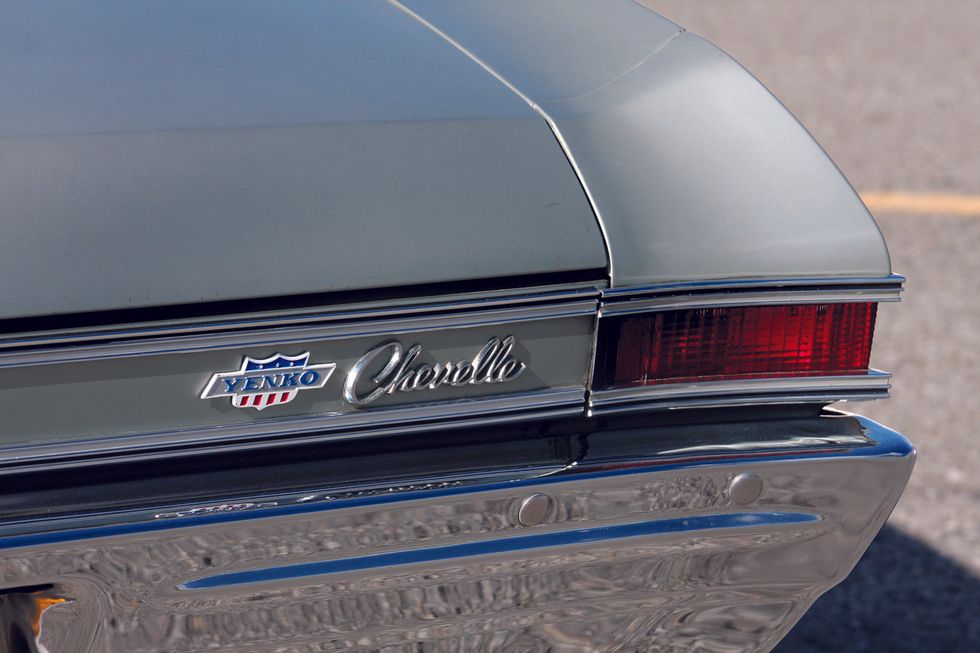
Photo: Thomas A. DeMauro
After the deal was made and Brian had the Chevelle back at his place, he dug into the car. “I started taking some things apart to clean it up, and I was just shocked—I didn’t think anyone had ever really been in this car. The wood wheel looks like it has never been touched, the back seat was probably never sat in…”
There were a few odd details that Brian investigated. First, the car wore a set of the ’69-style five-spoke Super Sport wheels. “Fran said the widow had told him her husband liked those wheels when they came out, so he went back to Yenko and got a set. I have no idea if that’s what really happened, but I can say that the wheels all have the same date code.” Brian wanted to put the car back to original, and fortunately had a pair of the correct XB-code 14 x 6-inch Rally wheels; a friend had two more. Brian also had a set of NOS center caps in his stash.
“The other weird thing on this car is the grille—it’s black, and it shouldn’t be,” Brian says, referring to the fact that only Super Sport Chevelles got black grilles. “I’ve looked at that very closely, and I’ve had other guys who really know these cars look, too—we all agree that it appears to have never been disturbed. It also doesn’t look like anyone ever masked it and sprayed it black. Who knows?”
Who knows indeed. It’s a question that surrounds many aspects of this rare and incredibly original Chevelle, given the untimely passing of the man who spec’ed it out new and then barely drove it. Fortunately, it was well kept, and has been in the care of people who appreciate exactly what it is since rolling out of that garage. Though Brian has owned many desirable Chevy muscle cars over the years, this one is quite special—an unusually optioned car that has remained inexplicably original.
Specifications – 1968 Chevrolet Chevelle Malibu
Price
- Base price: $2,690
- Options on car profiled: A51 Strato front bucket seats; G80 Positraction; L79 327/325 hp V-8 engine; M01 Heavy-duty clutch; M21 four-speed manual, close-ratio; N34 Woodgrain steering wheel; PW8 F70-14 red stripe tires; D55 console; ZJ7 Rally wheels
Engine:
- Type: Chevrolet “small-block” OHV V-8, cast-iron block and cylinder heads
- Cylinder heads: Chevrolet cast-iron “291” castings, 2.02/1.60-inch valves, 64-cc chambers
- Displacement: 327 cu.in.
- Bore x stroke: 4.00 x 3.25 inches
- Compression ratio: 11.0:1
- Horsepower @ rpm: 325 @ 5,800
- Torque @ rpm: 360 @ 3,600
- Camshaft: Hydraulic, flat-tappet, .447/.447-inch lift and 222/222 degrees duration (@ .050)
- Valvetrain: Stamped-steel stud-mounted rocker arms
- Induction system: Rochester Quadrajet four-barrel carburetor, cast-iron manifold, mechanical pump
- Lubrication system: Full pressure, gear-type pump
- Electrical system: 12-volt
- Exhaust system: Cast-iron manifolds, dual pipes, dual mufflers
Transmission
- Type: GM Muncie M21 close-ratio fully synchronized four-speed manual
- Ratios: 1st/2.20:1 … 2nd/1.64:1 … 3rd/1.28:1 … 4th/1.00:1 … Reverse/2.27:1
Differential
- Type: Chevrolet 12-bolt with Positraction limited-slip
- Ratio: 4.10:1
Steering
- Type: GM/Saginaw recirculating ball, manual
- Ratio: 22:1
Brakes
- Type: Hydraulic four-wheel drum
- Front: 9.5 x 2.50-in drum
- Rear: 9.5 x 2.0-in drum
Suspension
- Front: Independent, unequal length A-arms, coil springs, tubular shocks, anti-sway bar
- Rear: Live axle with two upper and two lower trailing links, coil springs, tubular shock
Wheels and Tires
- Wheels: GM stamped-steel Rally wheel, XB code
- Front/rear: 14 x 6 inches
- Tires: Firestone bias-ply redline
- Front/rear: F70-14
Production
For 1968, Chevrolet produced 180,401 Chevelle Malibu two-door coupes; Chevrolet also produced 4,082 L79-equipped Chevelles, of all available body styles. No further breakdown is available.
Commercials Cooperation Advertisements:
(1) IT Teacher IT Freelance

立刻註冊及報名電腦補習課程吧!
电子计算机 -教育 -IT 電腦班” ( IT電腦補習 ) 提供一個方便的电子计算机 教育平台, 為大家配對信息技术, 電腦 老師, IT freelance 和 programming expert. 讓大家方便地就能找到合適的電腦補習, 電腦班, 家教, 私人老師.
We are a education and information platform which you can find a IT private tutorial teacher or freelance.
Also we provide different information about information technology, Computer, programming, mobile, Android, apple, game, movie, anime, animation…
(2) ITSec

www.ITSeceu.uk
Secure Your Computers from Cyber Threats and mitigate risks with professional services to defend Hackers.
ITSec provide IT Security and Compliance Services, including IT Compliance Services, Risk Assessment, IT Audit, Security Assessment and Audit, ISO 27001 Consulting and Certification, GDPR Compliance Services, Privacy Impact Assessment (PIA), Penetration test, Ethical Hacking, Vulnerabilities scan, IT Consulting, Data Privacy Consulting, Data Protection Services, Information Security Consulting, Cyber Security Consulting, Network Security Audit, Security Awareness Training.
Contact us right away.
Email (Prefer using email to contact us):
SalesExecutive@ITSec.vip