
If you have a Dodge or Ram pickup in your driveway you should know this: There’s a Graham in its past. And we’re not talking about crackers.
Chrysler’s Dodge Truck Division (now known as Ram) came into existence in a somewhat convoluted way. Years before Dodge had a truck division—in fact, years before there was a Chrysler Corporation— there was an independent automobile company called Dodge Brothers. The two founders were brothers John and Horace Dodge, redheaded mechanics who got their start in the automobile business with a machine shop they set up in Detroit. Established in 1900, their shop specialized in manufacturing parts for the many small automakers that were being opened in and around Detroit.
In 1903, Henry Ford, cranking up production for his third try at becoming a successful automaker, asked the brothers to supply him with chassis for his new car. This they did, while also investing in Ford’s company to the tune of ten percent ownership. Business was soon booming, and the Dodge boys began making money hand over fist. However, the Dodge/Ford relationship was always a stormy one, and in 1914, the Dodges gave notice that they were terminating their contract with Ford in order to go into business with their own car. They sold their Ford stock, which provided the needed capital.
The new Dodge automobile was in many ways an improved version of the Ford, with a stronger, more powerful engine, an updated three-speed sliding gear transmission, and an overall sturdier design. Targeted to sell a step or so above Ford’s budget Model T while offering better performance and quality, the Dodge Brothers automobile was an instant success. They couldn’t build enough cars to meet demand, so trucks weren’t initially offered. However, bowing to popular demand, for 1917 the company did introduce a screen-side “commercial car,” a light-duty delivery truck body mounted on a slightly modified passenger car chassis.
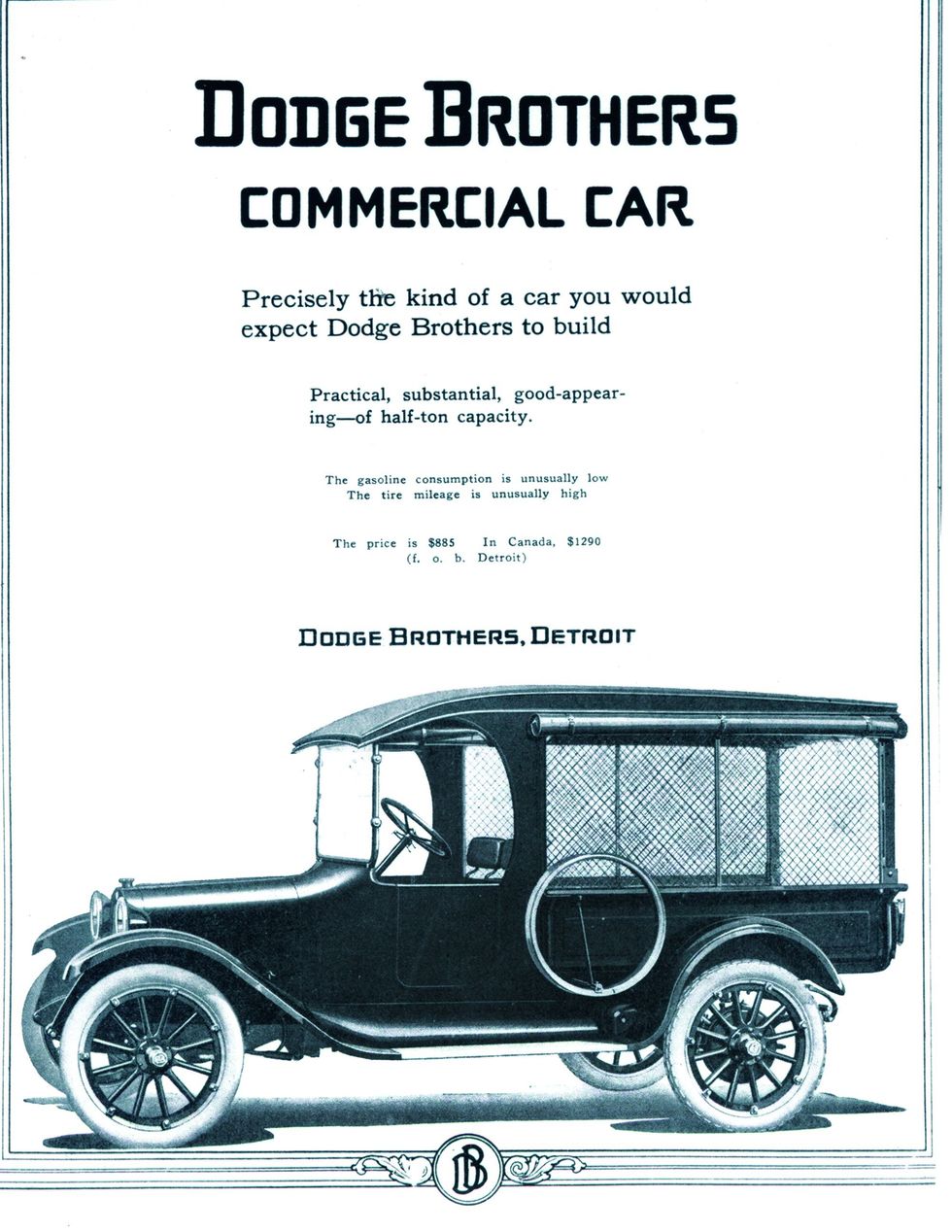
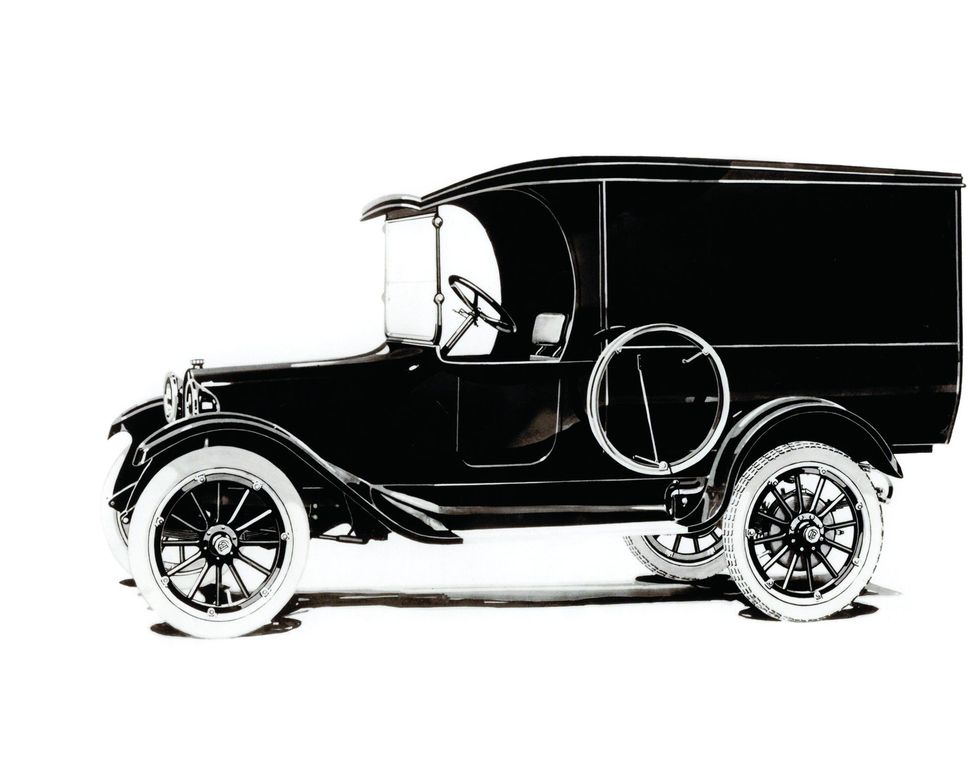
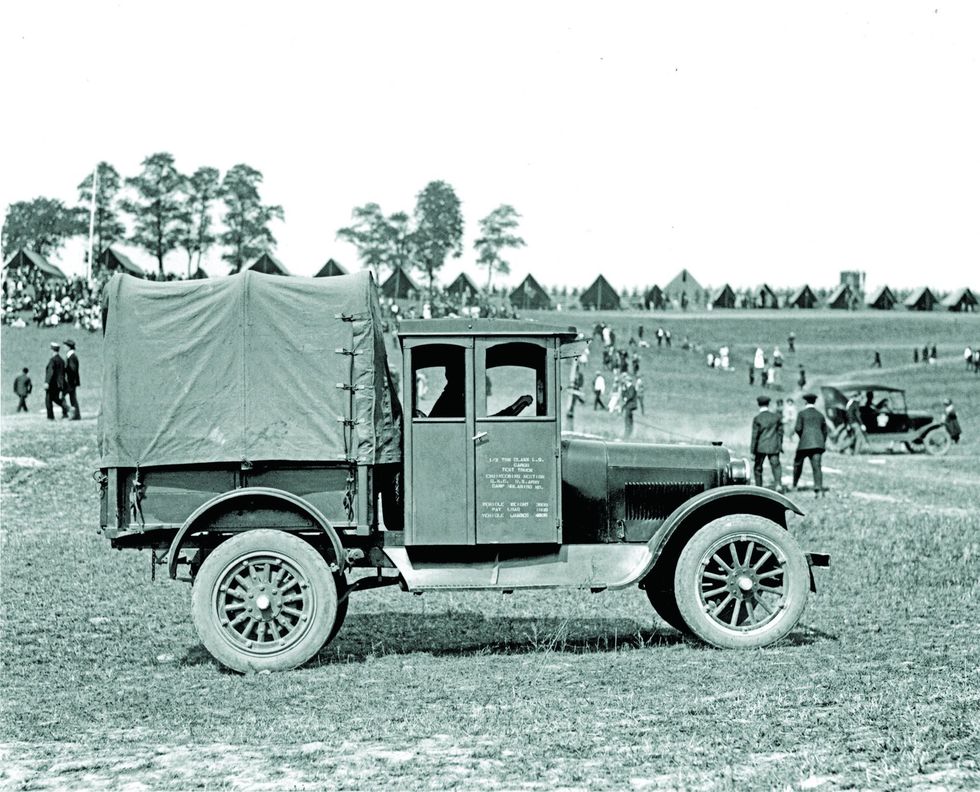
A year later, when America entered the First World War, the U.S. Army ordered hundreds of Dodge touring cars for service overseas. Dodge built beefed-up versions of its civilian cars, along with ambulances and screen-side delivery vehicles, on the commercial car chassis. Having thus gotten a taste of how profitable commercial vehicles could be, the Dodges added a second model to their domestic offerings: a panel-side Express Delivery with an enclosed body and a 2,600-pound load capacity. Management began to consider other truck models to add to the lineup.
Meanwhile, over in Indiana, another set of brothers was building a line of high-quality trucks. The Graham brothers—Joseph, Robert, and Ray—started out as owners of a successful glass bottle manufactory. In 1916 they received a buy-out offer from the Owens Bottle Company of Toledo, Ohio. The youngest brother, Ray, had recently developed a rear axle and frame combination that could be spliced onto Ford cars to convert them into one-ton trucks, so the three men decided to sell the glass holdings and go into business building truck bodies and conversion kits. The new enterprise proved successful, and by 1920, Graham was producing complete trucks and buses; prospects for the future were excellent. The brothers used a variety of engines to power their trucks, including the sturdy Dodge four-cylinder.
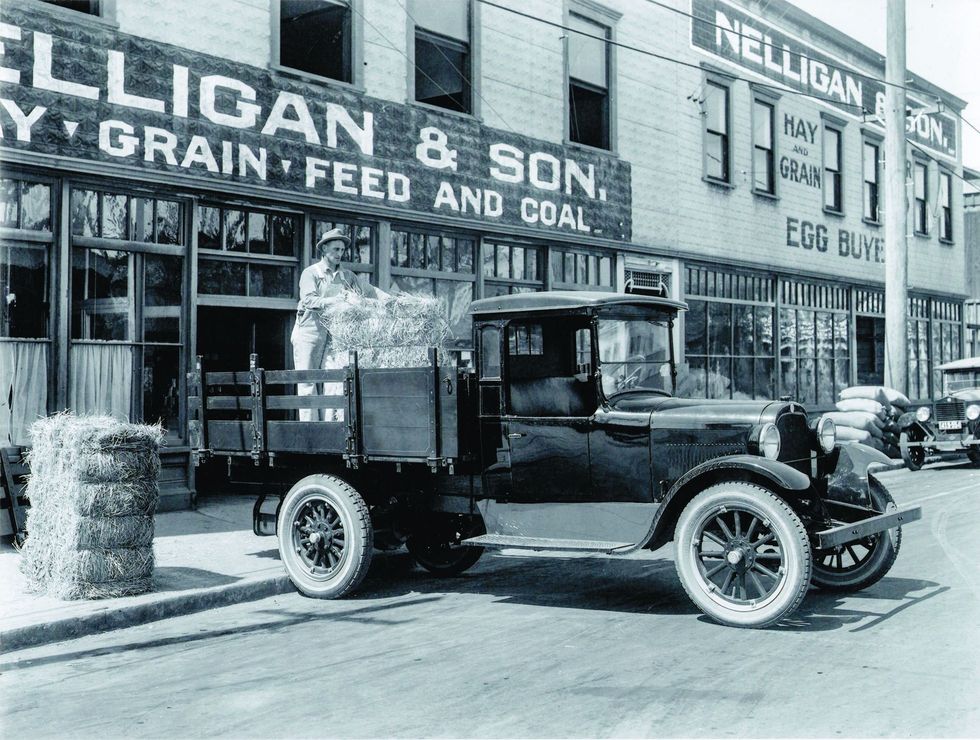
Sadly, the Dodge brothers both died of influenza in 1920, and management of the company was turned over to Frederick Haynes, an astute executive who saw in the Graham venture a way to add a broad line of trucks to his own firm’s offerings. In 1921, a deal was struck, with the Graham men agreeing that from then on, they would offer their trucks exclusively through the Dodge dealer network. Although they were powered by Dodge engines and offered solely by Dodge dealers, the trucks would still be badged as Grahams. A new company, Graham Brothers Inc., was set up to produce the volume of trucks Dodge’s large and aggressive retail sales network would require.
Graham trucks were quite attractive, with their C-type and enclosed cabs offering a bit more style and solidity than many of their competitors. The trucks were produced in 1-ton and 1-½ ton versions, and buyers could purchase just the base chassis-n-cabs or equipped with a wide variety of commercial bodies from Hoover Body Company, Babcock, Keystone, Stratton-Bliss, or any one of dozens of other body manufacturers. In addition to the usual Delivery and Express models, Grahams were ordered as oil trucks, stake and platform trucks, a variety of open and closed buses, and steel-bodied panel trucks.
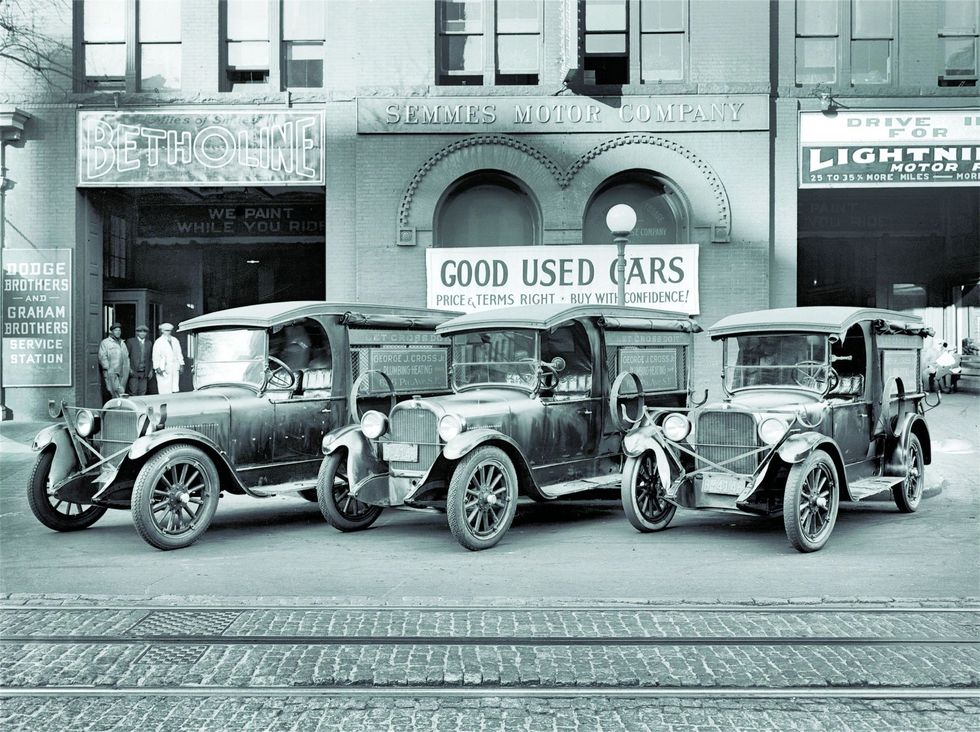
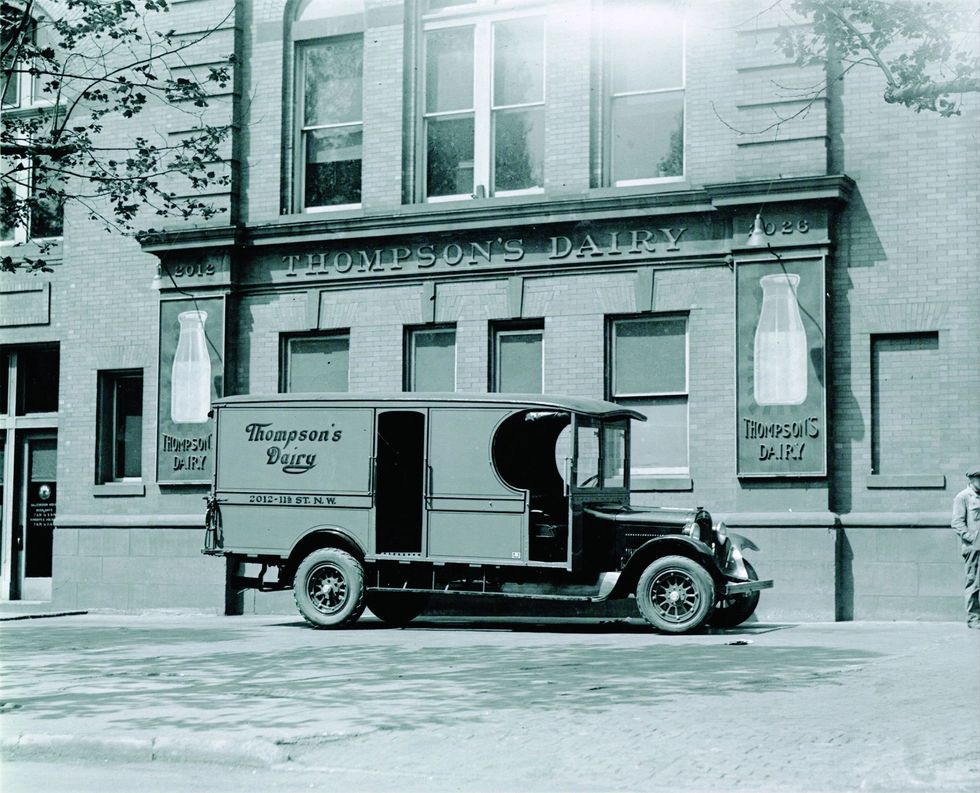
The styling of the Graham cabs was distinctive. Popular open C-cabs could be ordered with glass in the side quarter sections for better visibility, while most of the closed models boasted a Vestibule Cab, with stylish pane glass quarter windows.
Business was excellent right from the start. The Graham name was well-established, and the Dodge dealer network was large and strong. Before long, additional plants had to be erected to boost production as demand outstripped plant capacity. Output grew from about 12,000 combined Dodge and Graham trucks built in 1921 to more than 42,000 trucks in 1924—an exceptionally good volume in those days. In fact, combined sales of Dodge and Graham commercial vehicles were greater than every other truck brand but Ford.
In 1925, a group of New York investors, headed up by the investment firm Dillon, Read, and Company, purchased Dodge Brothers for $146 million. It was the largest cash transaction in the nation’s history to that point. Then, to have a more secure hold on Graham’s truck business, Dodge purchased 51 percent of Graham Brothers Inc. in 1926 for $3 million. The Graham brothers became high-level Dodge executives, but left the company less than six months later, selling their remaining 49 percent ownership of Graham Brothers to Dodge. The reason behind their abrupt departure isn’t clear.
It didn’t take long for Dillon, Read, and Company to decide they didn’t want to be in the car and truck business after all, so they sold the entire Dodge organization to Walter Chrysler’s Chrysler Corporation in 1928. The following year the Graham Truck nameplate was retired by the company, ending its short but very successful run. By that point the Graham brothers had acquired the old Paige Motor Company and launched a new car under the Graham-Paige name. This avoided the potential confusion of having Graham trucks and Graham cars being built simultaneously by two different firms.
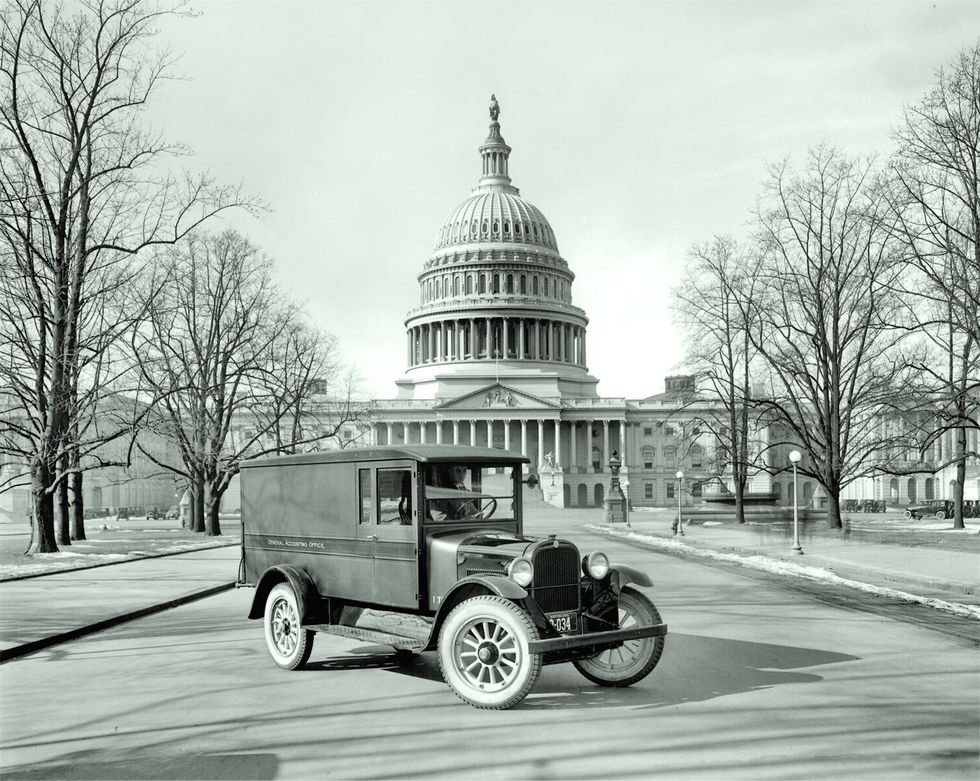
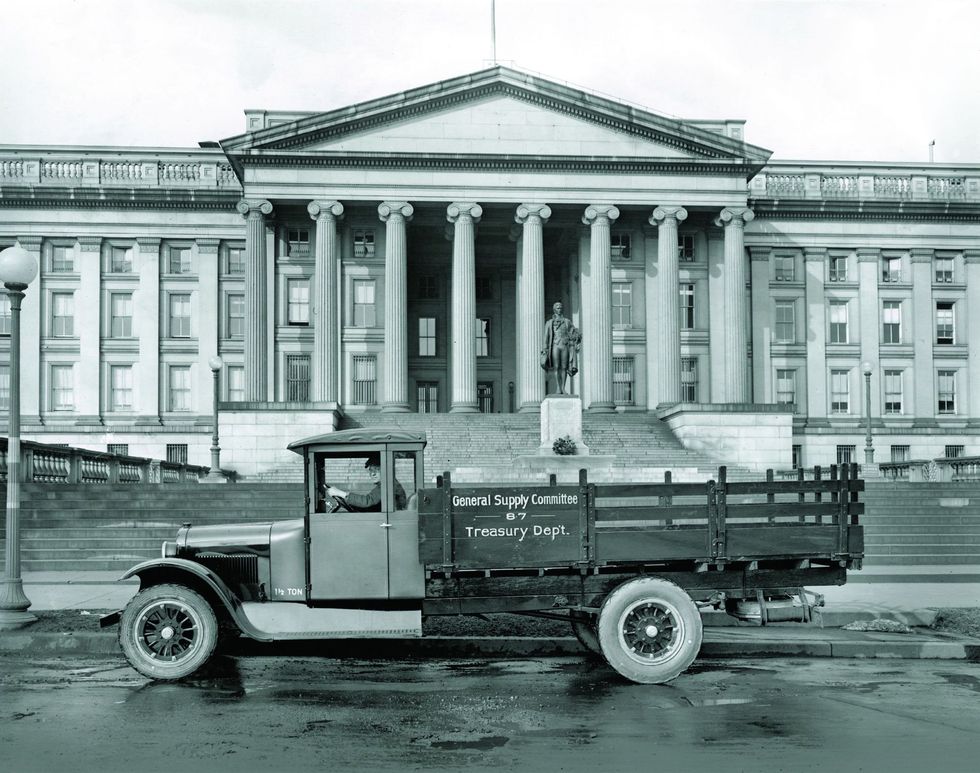
Although the Dodge nameplate had been used on commercial vehicles for more than a decade, the company had yet to offer a factory-built light-duty pickup truck to the public. Earlier commercial cars were usually fitted with Express Delivery (sort of a pickup with a fixed roof, sometimes with roll-down sides) or Screen Side Delivery (when fitted with screened side panels), Business Car (with panel sides), or any of the special-purpose bodies available on the aftermarket. Some pickup bodies had also been fitted, but not by the factory, at least not on a light-truck chassis. And of course, thousands of commercial vehicles had been purchased by the U.S. Army during the Great War. The first true factory-built Dodge pickup didn’t actually debut until 1929. However, when the company finally did jump into the light-duty pickup market, it did so with gusto—the Dodge ½-ton was as handsome a pickup as anyone could want. Called the Merchants Express, it initially utilized the Graham-designed Vestibule Cab that had been used on the Graham Enclosed Cab Pickup, which featured very stylish quarter windows along with a rooftop visor lip.
This proved a short-lived thing. Within about a year, the Graham-type Vestibule Cab was replaced by a more conventional closed cab, ending the last Graham-influenced Dodge styling feature.
Commercials Cooperation Advertisements:
(1) IT Teacher IT Freelance

立刻註冊及報名電腦補習課程吧!
电子计算机 -教育 -IT 電腦班” ( IT電腦補習 ) 提供一個方便的电子计算机 教育平台, 為大家配對信息技术, 電腦 老師, IT freelance 和 programming expert. 讓大家方便地就能找到合適的電腦補習, 電腦班, 家教, 私人老師.
We are a education and information platform which you can find a IT private tutorial teacher or freelance.
Also we provide different information about information technology, Computer, programming, mobile, Android, apple, game, movie, anime, animation…
(2) ITSec

www.ITSeceu.uk
Secure Your Computers from Cyber Threats and mitigate risks with professional services to defend Hackers.
ITSec provide IT Security and Compliance Services, including IT Compliance Services, Risk Assessment, IT Audit, Security Assessment and Audit, ISO 27001 Consulting and Certification, GDPR Compliance Services, Privacy Impact Assessment (PIA), Penetration test, Ethical Hacking, Vulnerabilities scan, IT Consulting, Data Privacy Consulting, Data Protection Services, Information Security Consulting, Cyber Security Consulting, Network Security Audit, Security Awareness Training.
Contact us right away.
Email (Prefer using email to contact us):
SalesExecutive@ITSec.vip