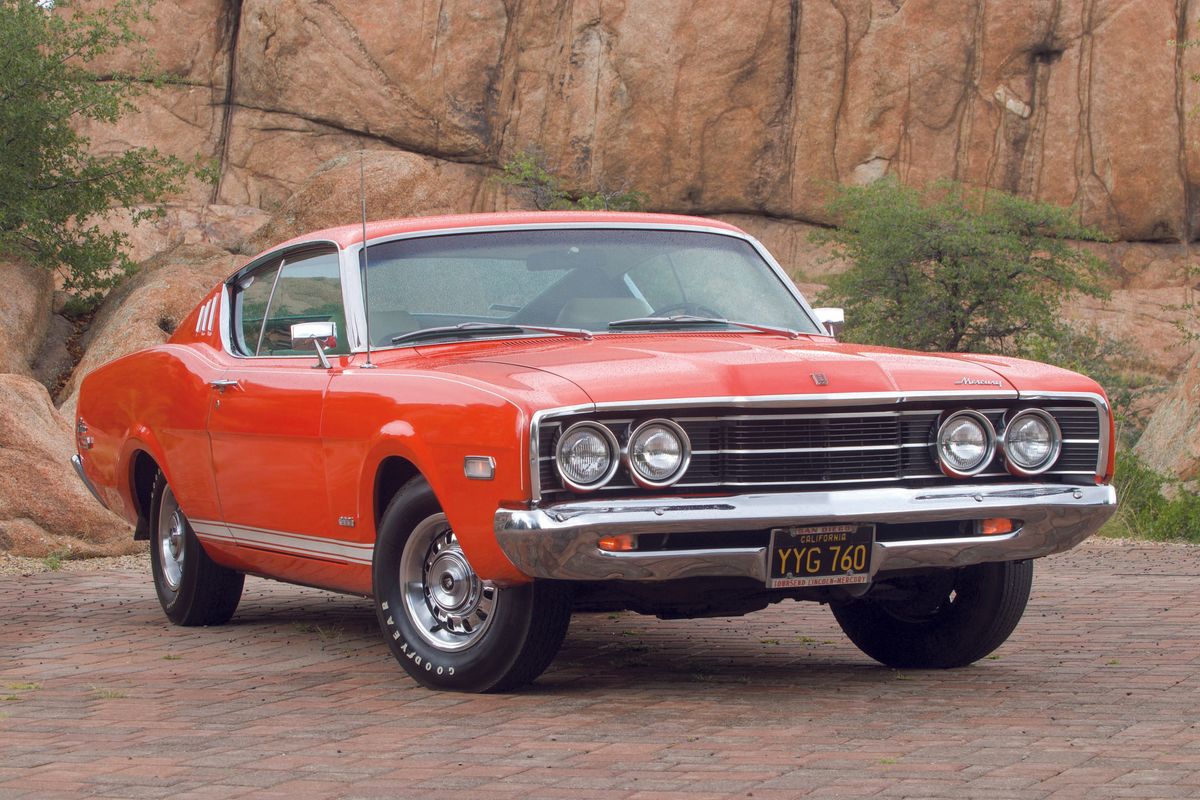
“It’s only original once,” the mantra goes. Really that only matters if the car in question isn’t a rusting, immovable hunk of twisted metal: patina is one thing, but “it’s only original once” doesn’t matter if you can see the pavement through the rust in the rockers and floors, or if it’s only running on five cylinders. Originality is awesome, but it stems from having careful owners from new; having it stay nice for decades, and even avoiding the “one careful repaint in the ‘90s” syndrome, is another issue entirely.
Such is the case with the 390-powered 1968 Mercury Cyclone fastback seen on these pages. It was purchased out of Townsend Lincoln-Mercury in the greater San Diego area and lived there for the bulk of its life. Its original owner barely had time to see the ink dry on the loan documents before he was drafted and sold it to a friend. That friend drove it for nearly 65,000 miles, keeping it original and unrestored (beyond essentials like fluids and tires) until his passing in the mid-1990s. Even the FoMoCo-stamped mufflers are original. It was clearly a cherished ride, kept snug in a covered garage, and while driven plenty, it was never abused.
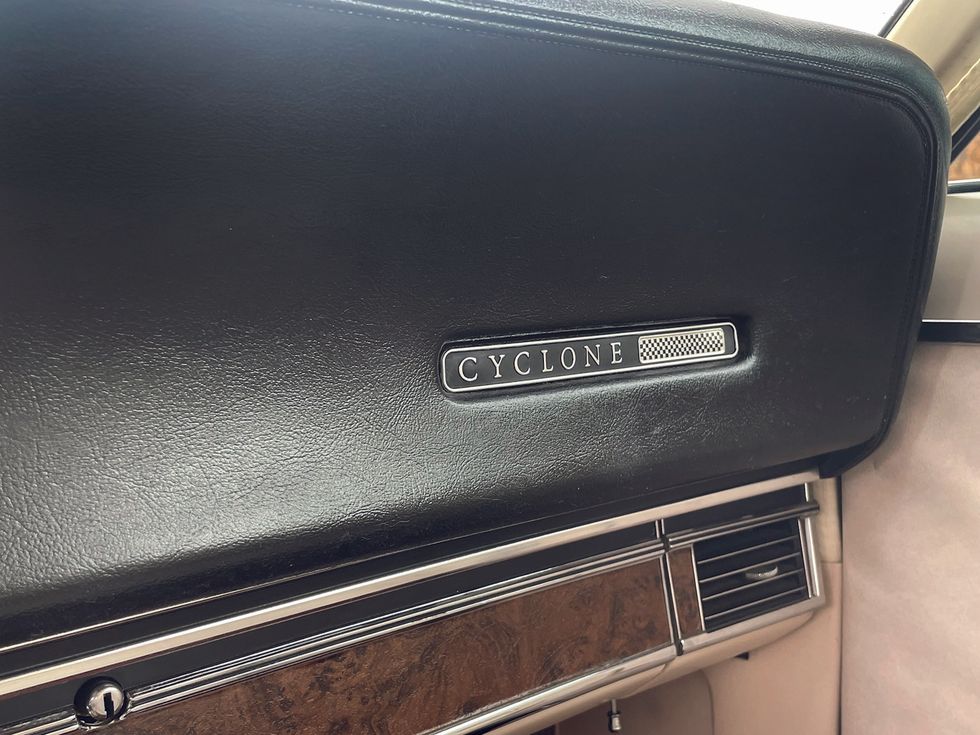
Photo: Jeff Koch
You’d think more would be known about the lineage Mercury midsize models like this one—and that more of them would have been sold. After all, FoMoCo more-or-less launched the intermediate-car market with its unit-body Fairlane, along with its stablemate, the Mercury Meteor, for 1962. That same year, the Fairlane/Meteor ended up the same size as the new “full-size” Plymouths and Dodges that had been shrunken compared to their predecessors. And while Fairlanes did well, appearing to be good value against comparably sized Mopars that were still priced like full-size cars, Mercury’s Meteor went away after ’63. The compact Comet, slowly growing in size over time, absorbed the Meteor’s space. By mid-’64 the Comet badge had spawned the range-topping Cyclone performance coupe, and though a K-code 289 was offered, it was not the same spec as the well-known Ford “hi-po” engine rated at 271 hp; the tamer Mercury version featured a chrome dress-up kit and a hydraulic-lifter valvetrain. A new mid-sized platform arrived for 1966, and Ford’s 390-cube V-8 was shoehorned in between the shock towers mid-year, replacing the 289 as top engine choice.
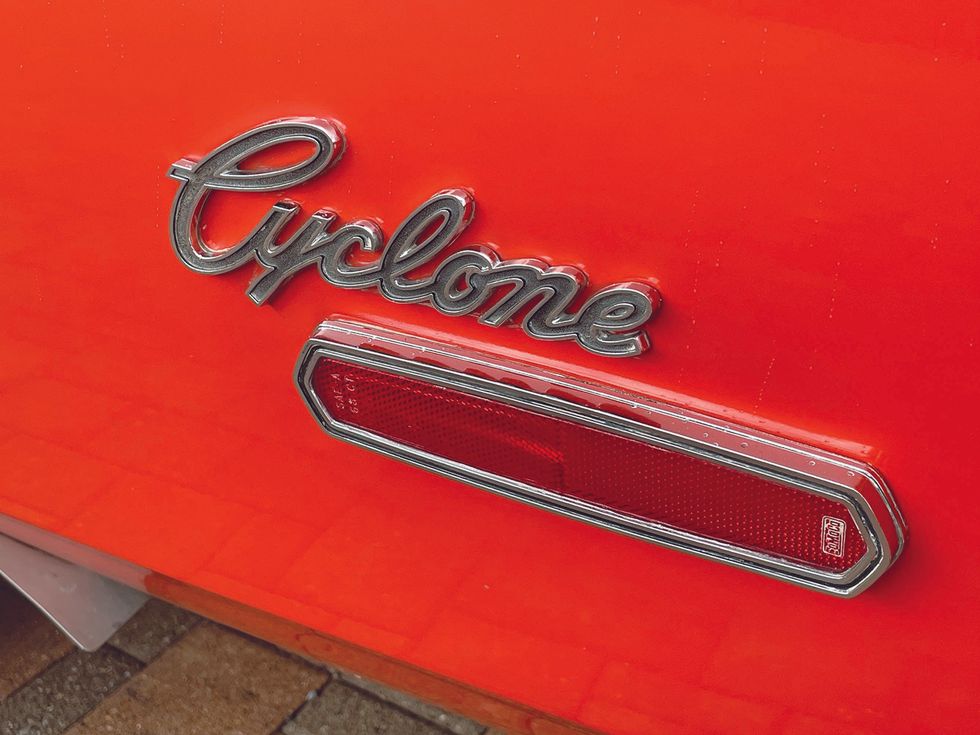
Photo: Jeff Koch
For 1968, Mercury shuffled its name plates, discarding some while maintaining others. The long-serving Comet name was relegated to a single poverty-spec two-door hardtop, while the bulk of the mid-sized line was now called Montego. Cyclone remained the mid-sized Mercury that muscle mavens remembered and recognized. The ragtop Cyclone variant had been retired for good after the ’67 models, meaning the new Cyclone could be had in either formal-roof hardtop or fastback form. It rode the same 116-inch-wheelbase chassis as the previous model did, though the new car was both longer and wider. All ’68 Cyclones came standard with power front disc brakes, heavy-duty suspension, an engine dress-up kit, fancy stripes, tinted rear window on fastbacks, and a bench seat. The Cyclone GT offered bucket seats, console, and badging. Both came with a 302-cubic-inch V-8 as standard, with four-barrel 390s and deep-breathing 427s available at the tick of a box on the order sheet. Their bodies were similar to their divisional Fairlane/Torino siblings, with distinctive nose and tail treatments for differentiation.
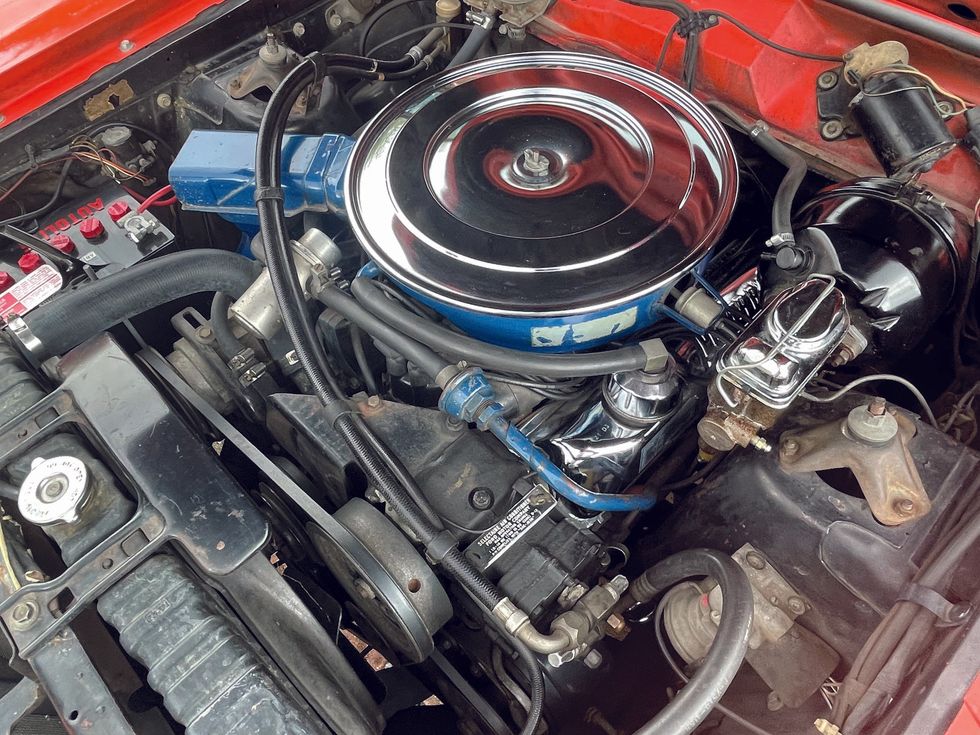
Photo: Jeff Koch
Much to Mercury’s (and Mercury dealers’) disappointment, ’68 Cyclones were never common on America’s streets: with tens of thousands of competitive GTOs and Road Runners and-the-like flying out of the factories, Mercury built just 1,368 formal-roof hardtops and 12,260 aero-friendly fastback Cyclones (and Cyclone GTs) for the season. Even when they were new, they were rarely seen. Today? Consider: Torino GTs alone outsold all Cyclones by a factor of six, yet today, even the Blue Oval intermediates tend to be scarce during cruise nights. Half a century later, Cyclones seem virtually invisible.
Which makes survivors like this Mercury all the more intriguing five-and-a-half decades beyond its build. The person who ordered this example, a base Cyclone fastback, plumped for the buckets-and-console that would have been standard on the GT. He also checked off the 325-horse Marauder 390GT engine (one of four 390s available in Mercury’s lineup, one of just two available in the mid-sized line, and the only one to arrive with 10.5:1 compression, a four-barrel carburetor and dual exhaust), floor-shifted C-6 automatic (called “Merc-O-Matic” in the brochures), “Whisper-Aire” air conditioning, polished 14-inch styled steel wheels with specific Mercury hubcaps, white-letter Polyglas rubber, and precious little else. For color choice, Calypso Coral was selected, a name usually associated with Ford models, and which would be called Competition Orange for Mercurys after ‘68. Interior color choice was limited to black or white—sorry, “parchment.” The original owner chose the latter.
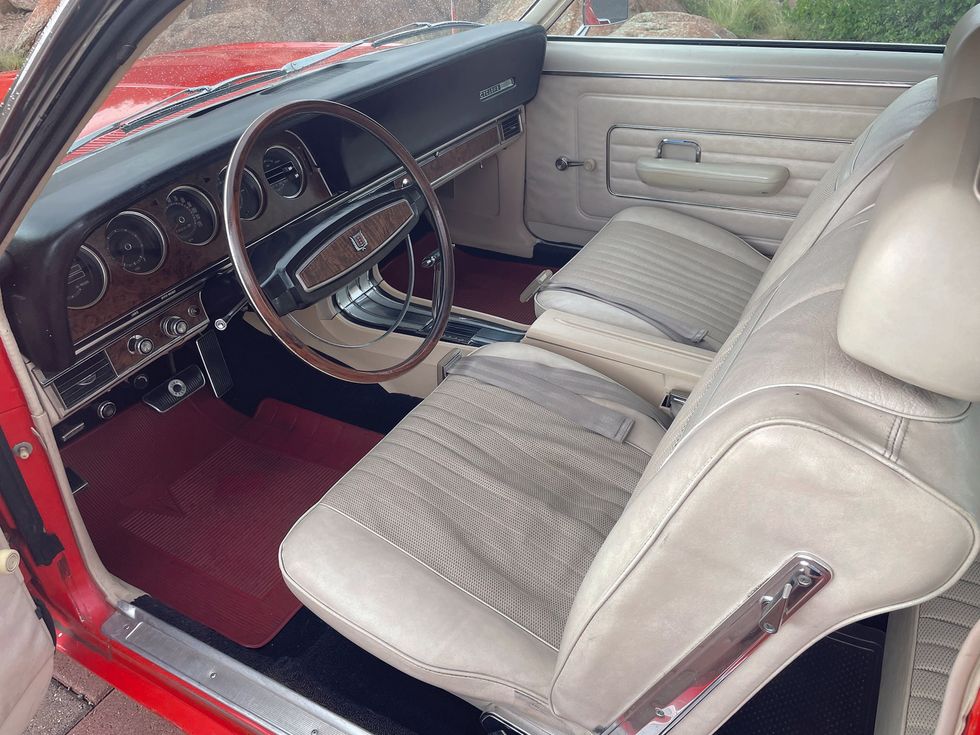
Photo: Jeff Koch
It is here that a father-and-son duo, both named Bradley Romaine, enter the picture—although the pieces that make up the puzzle were formed decades earlier. We covered Brad Senior’s owned-since-new ’69 Ford Torino GT, driven 230,000 miles, in the June ’23 issue of HMM. Brad II was seven years old when his dad bought that Torino, shortly after they moved to the greater San Diego area, and it’s fair to say that he grew up in the back of it. Time spent back there was both formative and informative. “Dad was very particular about that car,” Brad II recalled. “My sister Cindy and I could sit in the back seat, but we weren’t allowed ever to touch it—probably for the first five years, until he got his first chip in the paint. He was really picky back then—it was the first car that he’d bought new.”
There was one exception though: “Our extended family lived in Northern California, and the Torino has a really deep trunk, so he’d let me climb in and put presents all the way deep into the trunk.” We wondered if Brad II ever got to drive it for special occasions like, say, going to the prom? The answer was definitive: “No.” But a love of cars still took root: over time Brad II owned a ’69 Mustang Mach 1 along with a couple of hot-rodded ‘50s Ford pickups. Despite the trucks being rodded projects with roof chops and engine swaps, the don’t-mess-with-it attitude was also deeply ingrained in Brad II along the way.
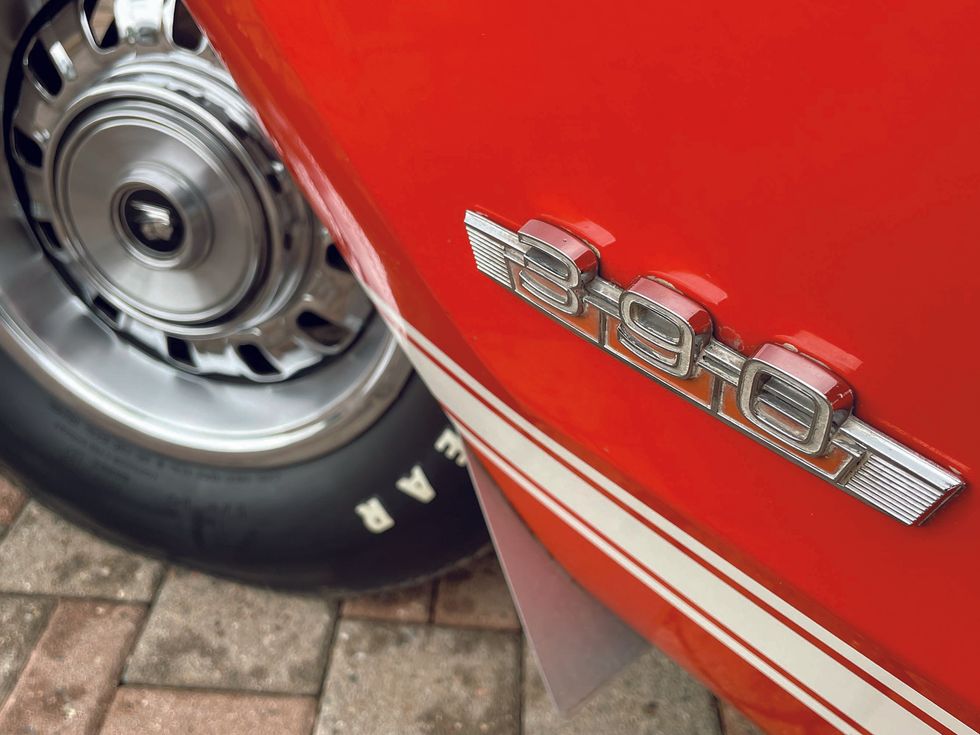
Photo: Jeff Koch
Brad the Elder had known the story of this Mercury more-or-less from new. Brad II had seen it again in the early ‘90s at a local event and initially thought it was a Torino like his dad’s; “I walked around it and thought it was pretty cool, but never thought I’d own it.” When the second owner passed, Brad the First approached the family with the eternal, “If you ever want to sell …” pitch. Knowing that Brad owned a similar car, and kept it well, must have been reassuring to the seller. A few months later, the Mercury owner’s family reached out. A deal was struck, and Bradley Romaine’s name was on the title.
Ah, but which Brad? Well… both. Brad II explains. “Dad owned it for about six months. But he had too many cars at the time, and he was storing it in a neighbor’s carport with a car cover on it. We’d get snow, rain, and hail. I’d go see it, and I’d ask, ‘Why is it sitting outside?’”
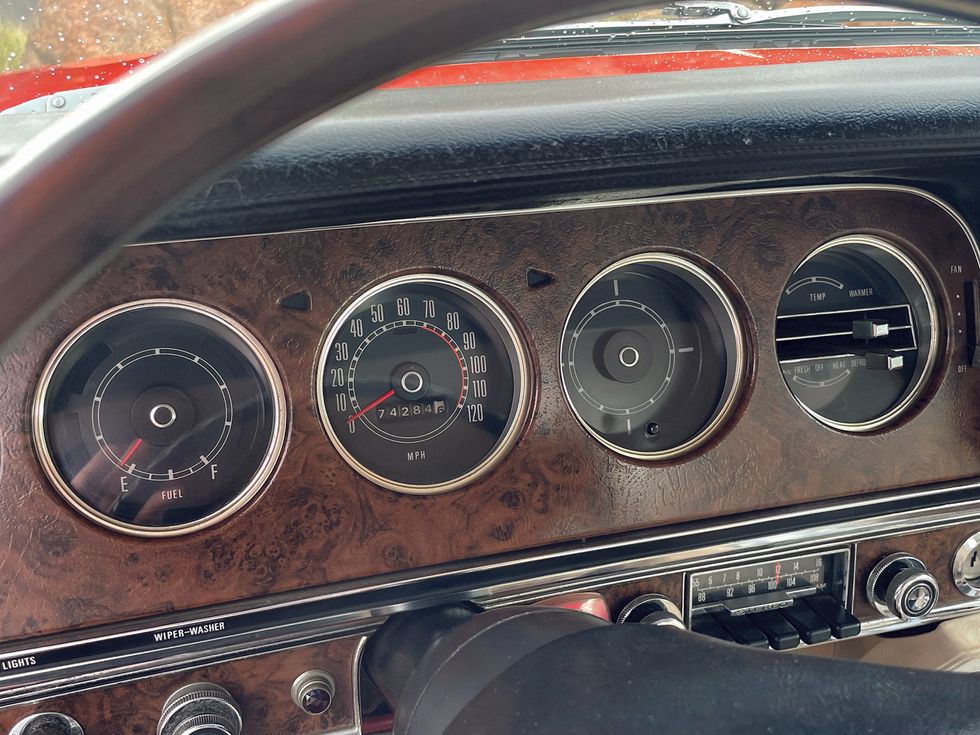
Photo: Jeff Koch
Long story short, “Dad knew I’d take care of the Cyclone, so I have it now. I had to sell a boat to pay for it. He still regrets selling it to me.” Brad the Elder, who was with us on site the day of our photo shoot, nodded to concur. His son laughs. “Dad reminds me every time we go to a car show and we park next to each other.” In Chino Valley, Arizona, where both Brads and their respective families have since moved and retired, that’s most weekends that are unaffected by winter snows or summer monsoons. Otherwise, the Cyclone remains under a car cover—in a locked garage rather than a carport that’s exposed to the elements. The lessons that Dad taught about taking care of things has been visited upon the son.
Although, that’s no guarantee of safety. “Six years ago, I installed overhead cabinets in my garage. One day I walked in to see one of the cabinets was missing … then I found it laying across the trunk and back window of the Cyclone.” Brad didn’t even want to look under the cover to see what the cabinet had done, fearing the worst, but … “there was only a minor dent in the left rear fender and a smudge on the trunk lid.” Neither have been removed, and having laid eyes on this car in person, they’re only visible if you’re really looking; photographs render the issues practically invisible.
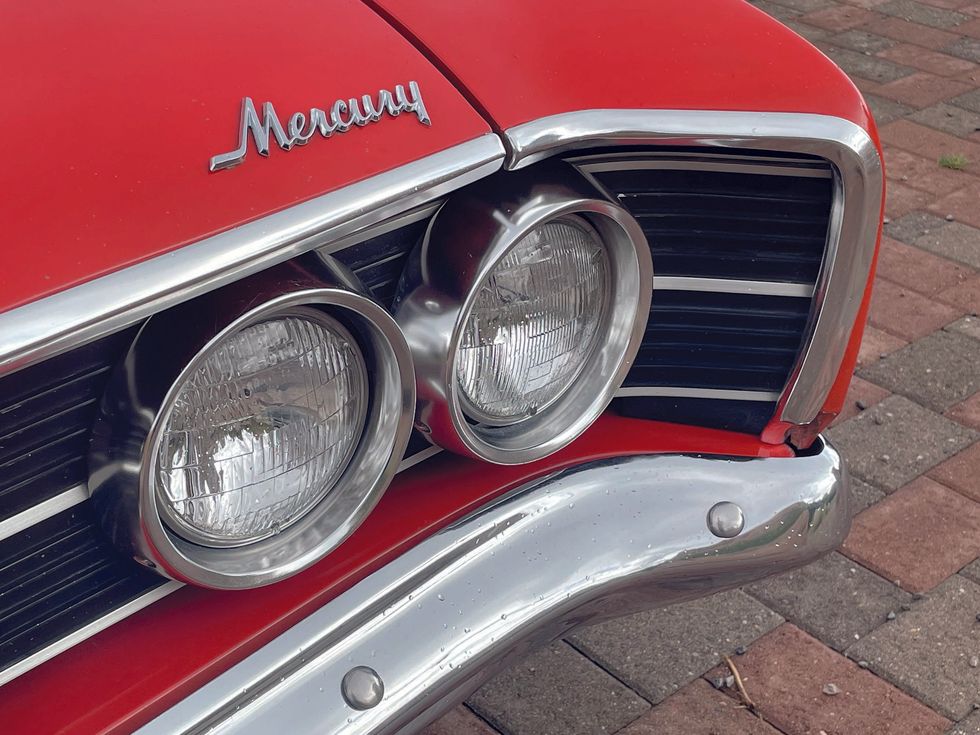
Photo: Jeff Koch
Keep looking, and there are clear signs of wear with care, and use but not abuse. The Calypso Coral paint shines like new, though there is a slight stain where gas overflowed out the fuel-fill neck and down the driver’s-side rear quarter. The parchment seat covers have clearly been sat in, but they’re not torn or discolored. Some of the interior trim is gently yellowing. A pair of orange tape strips on the rear bumper remain—they weren’t part of the car from the factory, but the original owner put them there and Brad II is loath to take them off. Scattered dings that you really need to look for disappear as quickly as you find them. It is an unrestored, unfussed-with car. Minus wear, it is as FoMoCo built it in 1968. This isn’t nit picking; this is identifying clues that prove this is indeed the unrestored machine that its owner claims it is. “Anyone can make it look brand new … but then it’s not original. My excitement with this car was that it was still like it came off the showroom floor,” Brad II explains. “It has dents in it—that’s the normal wear and tear of someone who drove it. They didn’t bother me because they told the story of the car. Once it’s not original, it’s not original. I keep it this way because I want it remembered that way ’til I’m gone, and I’ll keep it ’til I’m gone.” The odometer now shows just over 74,000 miles.
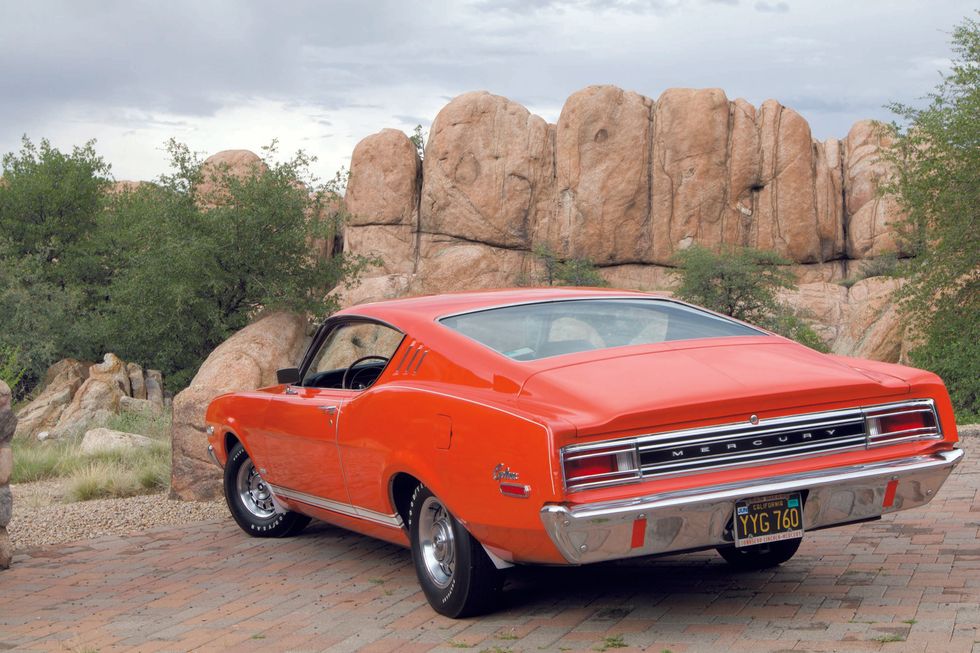
Photo: Jeff Koch
Before the move from San Diego, Brad II had the Cyclone at a car show when a father-and-son walked up. The older man marveled that it had been his grandfather’s car—and that it was exactly as he remembered it from when he was a kid. “He said he wished he could have had it,” Brad II told us. “But his mom sold it to my dad, and the guy told me that ‘She wouldn’t let us have it because we would have destroyed it.’” In Brad Romaine II’s hands, assuming the garage shelves are safely secured, this ’68 Mercury Cyclone fastback shall remain original for decades to come.
Specifications
1968 Mercury Cyclone
Base price: $2,768.00
Options on car profiled: Cruise-O-Matic transmission, $226; air conditioning, $361; Traction-Lok rear, $64; power steering, $95; power front disc brakes, $42; styled steel wheels, $18; AM radio, $59
Engine
- Block type: Ford FE series 90-degree OHV V-8, cast-iron block and cylinder heads
- Displacement: 390 cubic inches
- Bore and stroke: 4.232 x 3.784 in
- Compression ratio: 10.6:1
- Horsepower @ rpm: 325 @ 4,800
- Torque @ rpm: 427-lb.ft. @ 3,200
- Valvetrain: Overhead, hydraulic flat-tappet
- Main bearings: 5
- Induction system: Single 600-cfm Holley four-barrel carburetor, mechanical Carter fuel pump
- Lubrication system: Full-pressure, gear-type oil pump
- Electrical system: 12-volt
- Exhaust system: Cast-iron manifolds, dual exhaust
Transmission
- Type: Ford “Merc-O-Matic” C-6 three-speed automatic, cast-iron case
- Ratios: 1st/2:46:1 … 2nd/1.46:1 … 3rd/1.00:1 … Reverse/2.18:1
Differential
- Type: Ford 9-inch with Traction-Lok limited-slip
- Ratio: 3.00:1
Steering
- Type: Recirculating ball, power assist
- Ratio: 16:1
- Turns, lock-to-lock: 4.0
- Turning circle: 38 feet
Brakes
- Type: Four-wheel hydraulic disc/drum, vacuum power assist
- Front: 11.3-inch ventilated disc
- Rear: 10 x 2.25-inch drum
Suspension
- Front: Independent, upper wishbones, lower control arms with strut rods, coil springs, anti-roll bar, telescopic shock absorbers
- Rear: Rigid axle, semi-elliptic leaf springs, telescopic shock absorbers
Wheels & Tires
- Wheels: Stamped styled-steel disc
- Front/rear: 14 x 6 in
- Tires: Goodyear Polyglas white-letter bias-ply
- Front/rear: F70-14
Production
Mercury built 12,260 fastback Mercury Cyclone and Cyclone GT models combined for the 1968 model year.
Commercials Cooperation Advertisements:
(1) IT Teacher IT Freelance

立刻註冊及報名電腦補習課程吧!
电子计算机 -教育 -IT 電腦班” ( IT電腦補習 ) 提供一個方便的电子计算机 教育平台, 為大家配對信息技术, 電腦 老師, IT freelance 和 programming expert. 讓大家方便地就能找到合適的電腦補習, 電腦班, 家教, 私人老師.
We are a education and information platform which you can find a IT private tutorial teacher or freelance.
Also we provide different information about information technology, Computer, programming, mobile, Android, apple, game, movie, anime, animation…
(2) ITSec

www.ITSeceu.uk
Secure Your Computers from Cyber Threats and mitigate risks with professional services to defend Hackers.
ITSec provide IT Security and Compliance Services, including IT Compliance Services, Risk Assessment, IT Audit, Security Assessment and Audit, ISO 27001 Consulting and Certification, GDPR Compliance Services, Privacy Impact Assessment (PIA), Penetration test, Ethical Hacking, Vulnerabilities scan, IT Consulting, Data Privacy Consulting, Data Protection Services, Information Security Consulting, Cyber Security Consulting, Network Security Audit, Security Awareness Training.
Contact us right away.
Email (Prefer using email to contact us):
SalesExecutive@ITSec.vip