Montauk Mauler
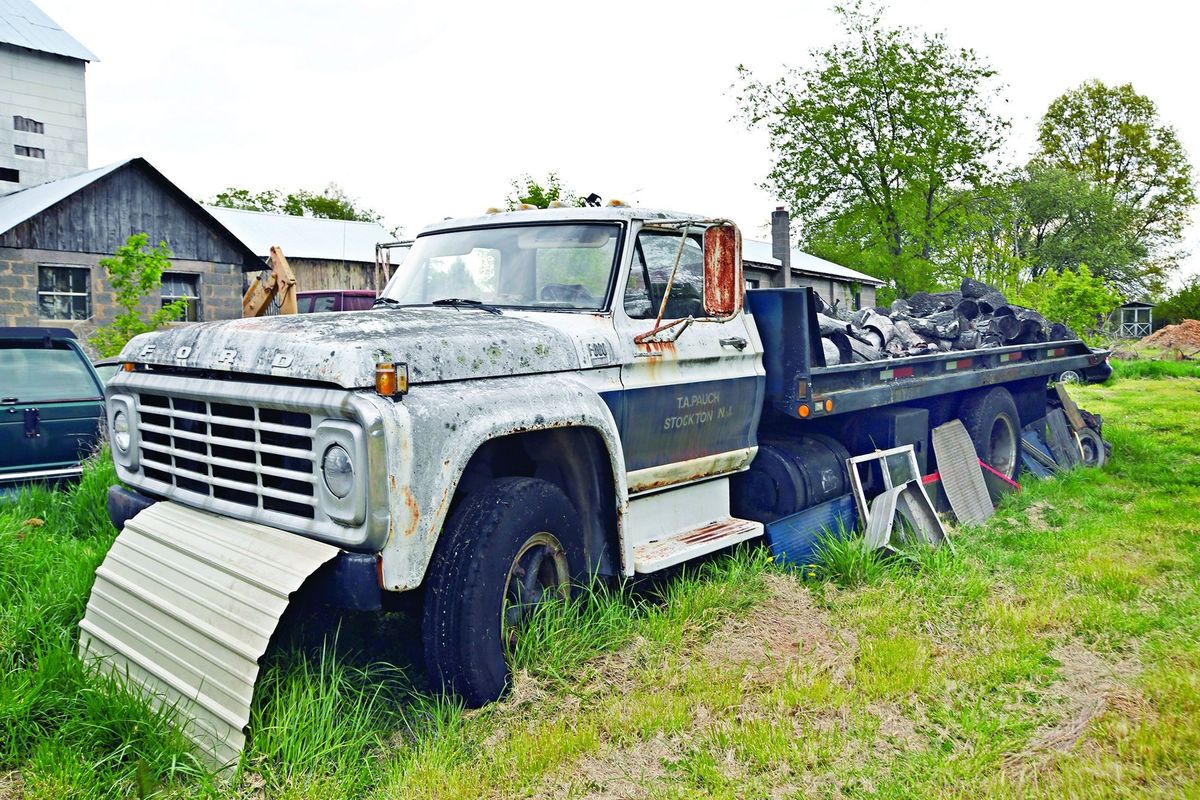
I truly enjoyed the article “Behind the Barn Finds” by Scotty Lachenauer in the October issue. The photo on page 39 showing the Ford F–600 stock hauler is my old truck that I drove on Long Island, and in Stephentown, New York, where Tim ultimately purchased it. He did not use the Ford in the late 90s, as I still owned it then; Tim purchased it in 2007.
Let me describe the Ford. The front bumper was from a Mack truck, the front axle came from a Ford F-800, and the engine was a Ford 361-cu.in. Y-block that was bored .030 over and had a 20/20 crankshaft. Behind the engine was a Clark five-speed transmission, and a two-speed rear axle. The clutch actuator rod was brazed together by me and can be seen in the cab.
I often took the F-600 on the Port Jefferson Ferry, while hauling cars to and from the New Haven Auto Auction to my business, Montauk Auto Parts. I kept the Ford and used it to junk cars for the year after I sold the business to D & D Used Truck Parts in February 2000.
That Ford was an engineering marvel; it weighed 10,000 pounds empty, and I often had a Chevrolet Suburban on the bed while towing a full-size Bronco at the same time. The Ford could stop with a load like that perfectly. I installed power steering when the engine was being rebuilt.
What great memories that photo has brought to an old auto gearhead. When I sold the F-600 to Tim, the exhaust was totally shot, and I was embarked on my second career…in real estate.
– Joseph Champion, via email
Art Deco Dreaming
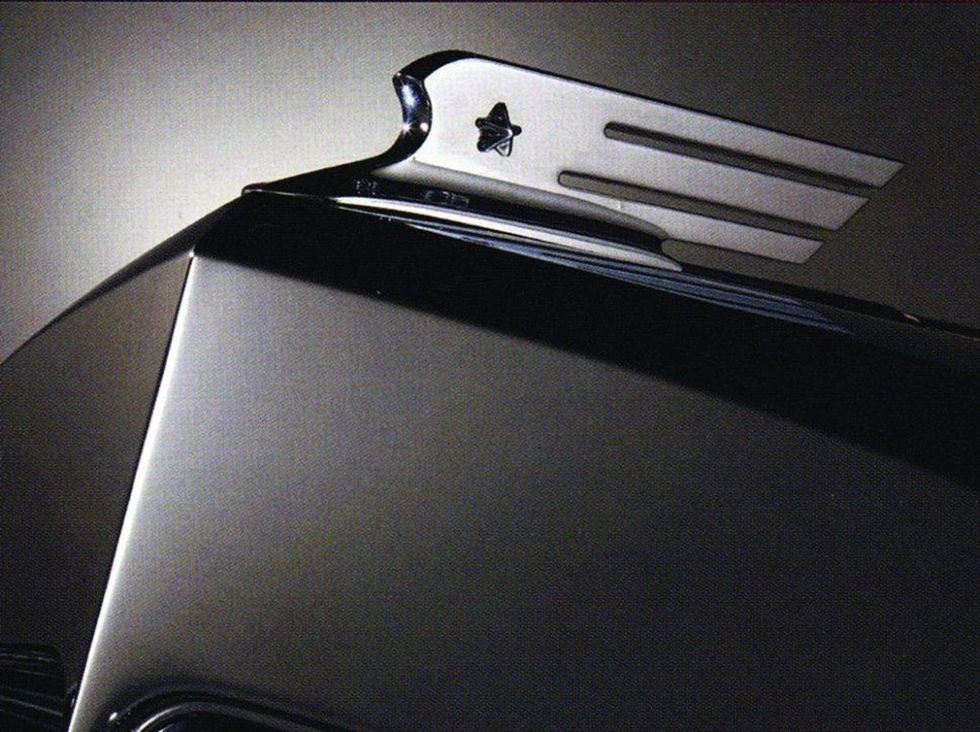
Jim Richardson’s superb column, “Deco Daze,” in the October issue especially resonated with me. I’ve been an admirer of designs from the Art Deco/Streamline Moderne era as long as I can remember, whether the designs were automobiles, architecture, trains, ships, and so on.
Frank Lloyd Wright’s mentor, Louis Sullivan, said “form follows function.” But Wright said, “form and function are one.” Wright’s multiple architectural styles were certainly not art deco, but I think that the oneness he espoused is expressed in the most successful of the art deco era automobile designs.
I’m 75 and have had ownership/love affairs in the past with numerous 1960s and ‘70s Detroit muscle cars, a Porsche, and a couple vintage 1960s Ferraris. But what really captures my gearhead’s heart are the cars I could never own from the 1930s, my favorites being various models by Cord, Auburn, Duesenberg, Bugatti, and Delahaye.
This Fall I’m going to cross a line item off my bucket list when I get to spend some time at the Auburn-Cord-Duesenberg Museum in Auburn, Indiana, viewing my favorite, beautiful art deco era automobiles in a beautiful art deco inspired building. Thank you, Jim Richardson, for ratcheting up even more my anticipation of that coming experience!
– Bill Blissett, Oro Valley, Arizona
Old School Road Tripping and Technology
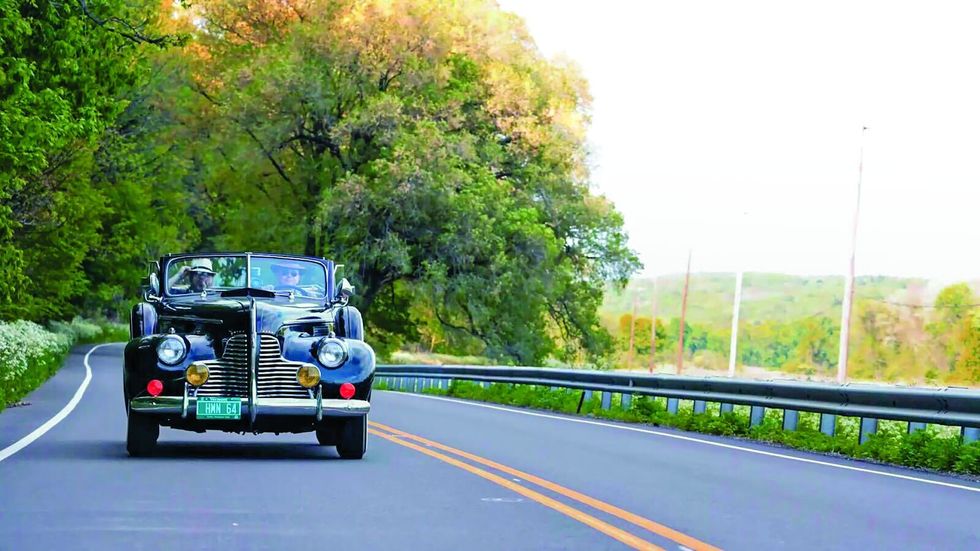
I just voraciously read the October issue. As usual it hits on all cylinders. I particularly want to say I agree with the fact that new cars are not fun or really interesting. I find driving my 1955 Ford Thunderbird on the country roads and 1930’s vintage highways a lot more fun. I will purposely go out of my way to drive on older routes, as mentioned in the article about the 1940 Buick.
The mention of the foot starter button brought back memories of my 1936 Plymouth and an old 1953 Dodge service truck. That old Dodge was a secondhand gas company service truck. We used it for road calls to our gas station. It was a strong horse. Besides the starter button, it had both a choke and accelerator cable. I believe the Plymouth may have had them also, but that went to the great bone yard in the sky after crashing it into a 1960 Oldsmobile 88.
Keep up the good work. I enjoy reading about cars that I remember and many that I worked on for most of my adult life.
– Everett Philla, Acushnet, Massachusetts
More Buick Memories
I had contemporary experience with 1940 Buicks at the tender age of 15. My future brother-in-law, Glenn Miller, had a 1940 Buick Special four-door sedan, finished in two–tone light brown, which he acquired around 1943. It didn’t have particularly good gas mileage for World War II gas rationing but was considered a sexy car. It is interesting to compare the problems he had with that car to your problems with the 1940 Century.
The biggest problem was overheating. I remember it boiling over on a trip from Canton, to Columbus, Ohio, in June 1948. Buicks of that period were known for overheating. It was a particular problem on the then-new Pennsylvania Turnpike, where you could cruise at 60-plus mph. I think he needed to replace a plugged-up radiator core. I was glad to see you addressed the radiator on the Century.
To my knowledge Glenn never had a transmission problem. This was in the early synchro days when the drivers were abandoning double clutching. Our family car was a 60-hp 1937 Ford, which had the reputation of having an inadequate synchro transmission. My father would clash the gears. My mother criticized him about it, but he would say that the transmission had good Ford steel in it and could take it. After replacing some gears a couple times, the Ford dealer swapped in a transmission designed for the same-year 85-hp engine, and we didn’t have any more stripped gear problems. Perhaps the owner of the Century relied on Buick steel over doing the equivalent of double clutching in low gear.
– Don Ryman, Buchanan, Michigan
“A” Restorations
I enjoyed reading Rick MacCornack’s “Value of the Old Car Hobby” in the Reminiscing column of your October issue for several reasons. I grew up in Orange, New Jersey, where my brother, Bayley, restored a 1929 Model A Ford woody during the mid to late ‘60s. Inspired by my brother’s work, in the late ‘60s I undertook the restoration of a 1931 Model A Ford Victoria.
My brother was meticulous in the woody’s restoration, replacing every piece of wood with the many varieties of timber used by Ford in the late ‘20s. Like Mr. MacCornack, the only pieces he did not fabricate were the tongue and groove pieces around the rear wheel fenders.
While the Victoria was a basket case, it was mostly complete, except for the rain gutters, which also served to cover the nails for the “leather back” roof. The rain gutters were probably the most difficult parts to find for a Victoria, as they only fit a Victoria.
While stationed at Fort Devens in Massachusetts, I drove my wife, Eileen, and one-year old son, Mike, up to Haverhill, New Hampshire, to visit Page’s Model A with the hopes of finding a set of original rain gutters.
Fred Page led us around to various barns and sheds in the quaint town of Haverhill to show us all his Model A’s. As I recall, his pride and joy was a Ford A-400, which appeared to be all original. He couldn’t have been more gracious with his time.
Fred told me he thought he had a set of gutters for a Victoria stashed away somewhere and that he would send them to me when he found them. Some days later I received a large mailing tube containing the set of gutters. Inside the tube was a bill. Who extends that kind of trust anymore?
As to the Victoria, I had it professionally restored in the ‘80s and finally sold it on Hemmings Auctions in late 2020. Vicky created a lot of memories for me in the 52 years I owned her, from taking my three sons for ice cream in the summers to taking their kids for similar rides. The grandkids had never seen a car with wind-up windows, that had to be shifted, or for which hand signals substituted for turn signals.
I enjoy your magazine; keep up the good work.
– Bernard Davis, via email
The Hawk and the Spider
Rarely have I seen a better juxtaposition of automobiles showing the “Elegant perfection in a magnificent European-type road car…” than the pictures of the 1963 Studebaker Gran Turismo Hawk (page 30 of your October 2023 issue) and the 1959 Alfa Romeo 2000 Spider (page 17 of that issue). Two beautiful examples, from opposite sides of the Atlantic, of the finest era of automotive styling!
P.S. I have a 1961 Alfa Romeo Giulietta Spider.
– Richard Kennedy, Sandy, Utah
Taillight Tales
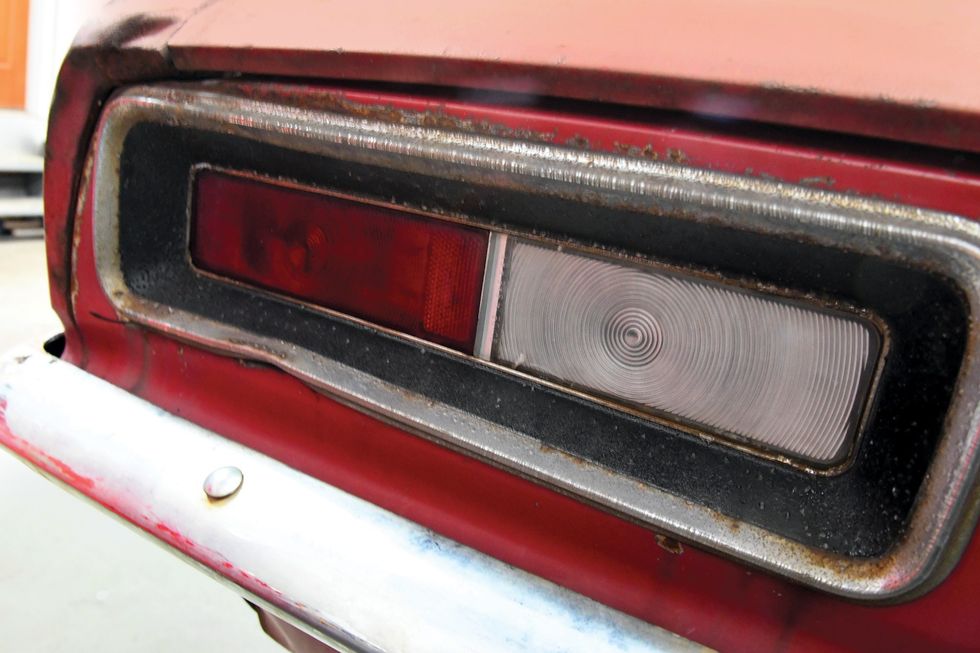
Upon receiving the July issue (#226) I was surprised to see the picture of the 1967 Camaro taillight on page 48.
I started a tool and die apprenticeship in 1965 in Grand Rapids, Michigan. While at Paragon Die and Engineering, I built my first diecast mold as a die leader in 1966: a four-cavity mold, (two left-hand and two right-hand parts) in each shot. It doesn’t appear the one pictured is severely pitted as many diecast parts get when subjected to the elements.
In the ’60s the car industry switched to casting more parts in plastic to save weight and deter corrosion and the diecast parts faded out. I worked 37 years building molds for many different vehicles, including grilles, taillamps, and fascias. I also built the sub dash for the Chrysler “K” car that all the components fit into. There was a lot of pressure from Chrysler as it was one of the last parts they needed to start running production. I also built molds for the front and rear fascias for the Pontiac Aztek, which I thought was about the ugliest car I ever saw, but I guess some people loved them. To each his own.
Before I finished this comment, I noticed you did it again. On page 36 in the October issue, there’s a picture of a 1968 Camaro with rear taillamp bezels on the dash; fond memories!
– Darryl Norquist, Comstock Park, Michigan
Taillight Tales
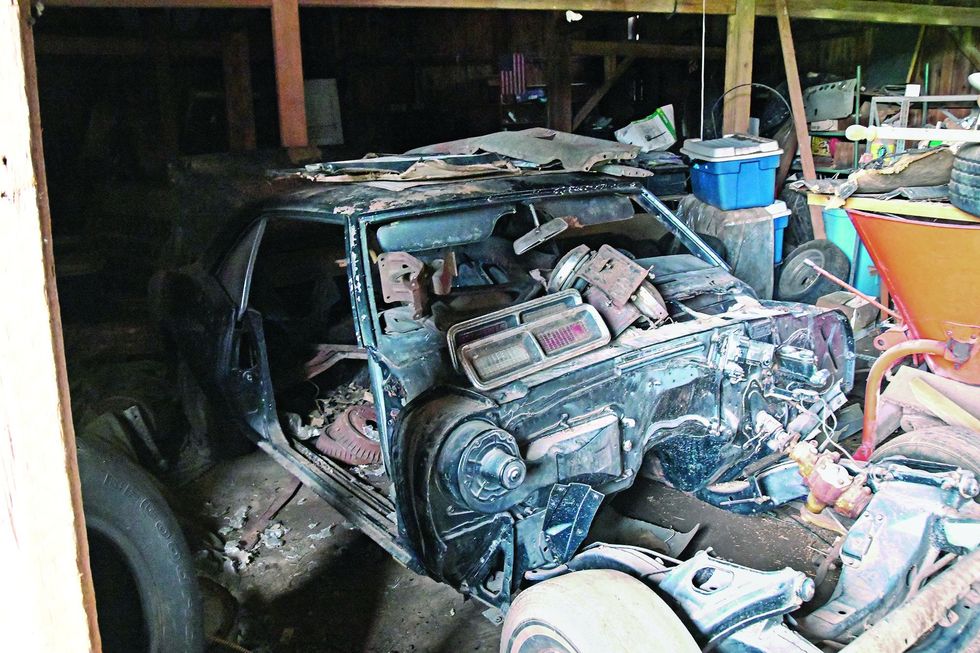
Upon receiving the July issue (#226) I was surprised to see the picture of the 1967 Camaro taillight on page 48.
I started a tool and die apprenticeship in 1965 in Grand Rapids, Michigan. While at Paragon Die and Engineering, I built my first diecast mold as a die leader in 1966: a four-cavity mold, (two left-hand and two right-hand parts) in each shot. It doesn’t appear the one pictured is severely pitted as many diecast parts get when subjected to the elements.
In the ’60s the car industry switched to casting more parts in plastic to save weight and deter corrosion and the diecast parts faded out. I worked 37 years building molds for many different vehicles, including grilles, taillamps, and fascias. I also built the sub dash for the Chrysler “K” car that all the components fit into. There was a lot of pressure from Chrysler as it was one of the last parts they needed to start running production. I also built molds for the front and rear fascias for the Pontiac Aztek, which I thought was about the ugliest car I ever saw, but I guess some people loved them. To each his own.
Before I finished this comment, I noticed you did it again. On page 36 in the October issue (#229), there’s a picture of a 1968 Camaro with rear taillamp bezels on the dash (see below); fond memories!
Darryl Norquist–Comstock Park, Michigan
Commercials Cooperation Advertisements:
(1) IT Teacher IT Freelance

立刻註冊及報名電腦補習課程吧!
电子计算机 -教育 -IT 電腦班” ( IT電腦補習 ) 提供一個方便的电子计算机 教育平台, 為大家配對信息技术, 電腦 老師, IT freelance 和 programming expert. 讓大家方便地就能找到合適的電腦補習, 電腦班, 家教, 私人老師.
We are a education and information platform which you can find a IT private tutorial teacher or freelance.
Also we provide different information about information technology, Computer, programming, mobile, Android, apple, game, movie, anime, animation…
(2) ITSec

www.ITSeceu.uk
Secure Your Computers from Cyber Threats and mitigate risks with professional services to defend Hackers.
ITSec provide IT Security and Compliance Services, including IT Compliance Services, Risk Assessment, IT Audit, Security Assessment and Audit, ISO 27001 Consulting and Certification, GDPR Compliance Services, Privacy Impact Assessment (PIA), Penetration test, Ethical Hacking, Vulnerabilities scan, IT Consulting, Data Privacy Consulting, Data Protection Services, Information Security Consulting, Cyber Security Consulting, Network Security Audit, Security Awareness Training.
Contact us right away.
Email (Prefer using email to contact us):
SalesExecutive@ITSec.vip