Over the last 18 months, there has been a significant shift
toward leasing for electric vehicles in the United States —
driven both by market dynamics and federal legislation.
Looking first at industry dynamics, vehicle inventories have
grown as the pandemic and microchip shortage have receded. These
changes have also shifted the market from a seller's market to a
buyer's market. As buyers have gained more leverage, downward
pressure on pricing has intensified.
One major tool used to lower prices, particularly for luxury
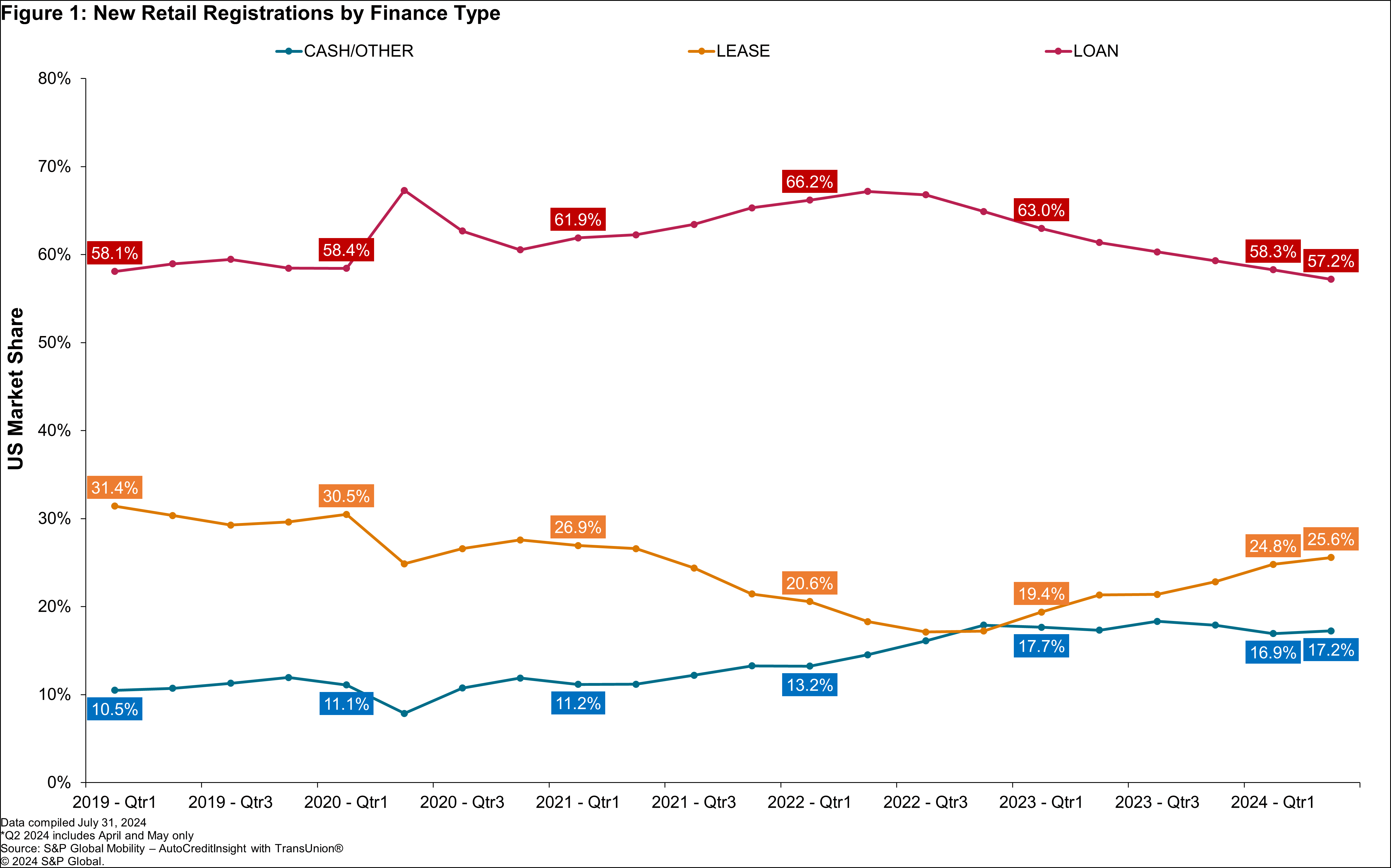
vehicles, is leasing. We have seen a growing percentage of leased
new vehicles since the second half of 2022, as shown in Figure 1.
From its low point of 17.1% in Q3 2022, lease mix has climbed more
than 8 percentage points to 25.6% this past April and May. Note
that most of leasing gains have come at the expense of loans, while
cash mix has remained relatively stable since the end of 2022.
But federal legislation, and specifically the Inflation
Reduction Act (IRA) signed into law by President Biden in August of
2022, has also contributed to this shift. Specifically, the IRA
allows most EV leases to qualify for a $7,500 tax credit, in
contrast to loans, which have numerous qualifications. These
additional funds provided by the IRA have also enabled dealers to
offer attractive EV lease monthly payments, relative to loan
payments.
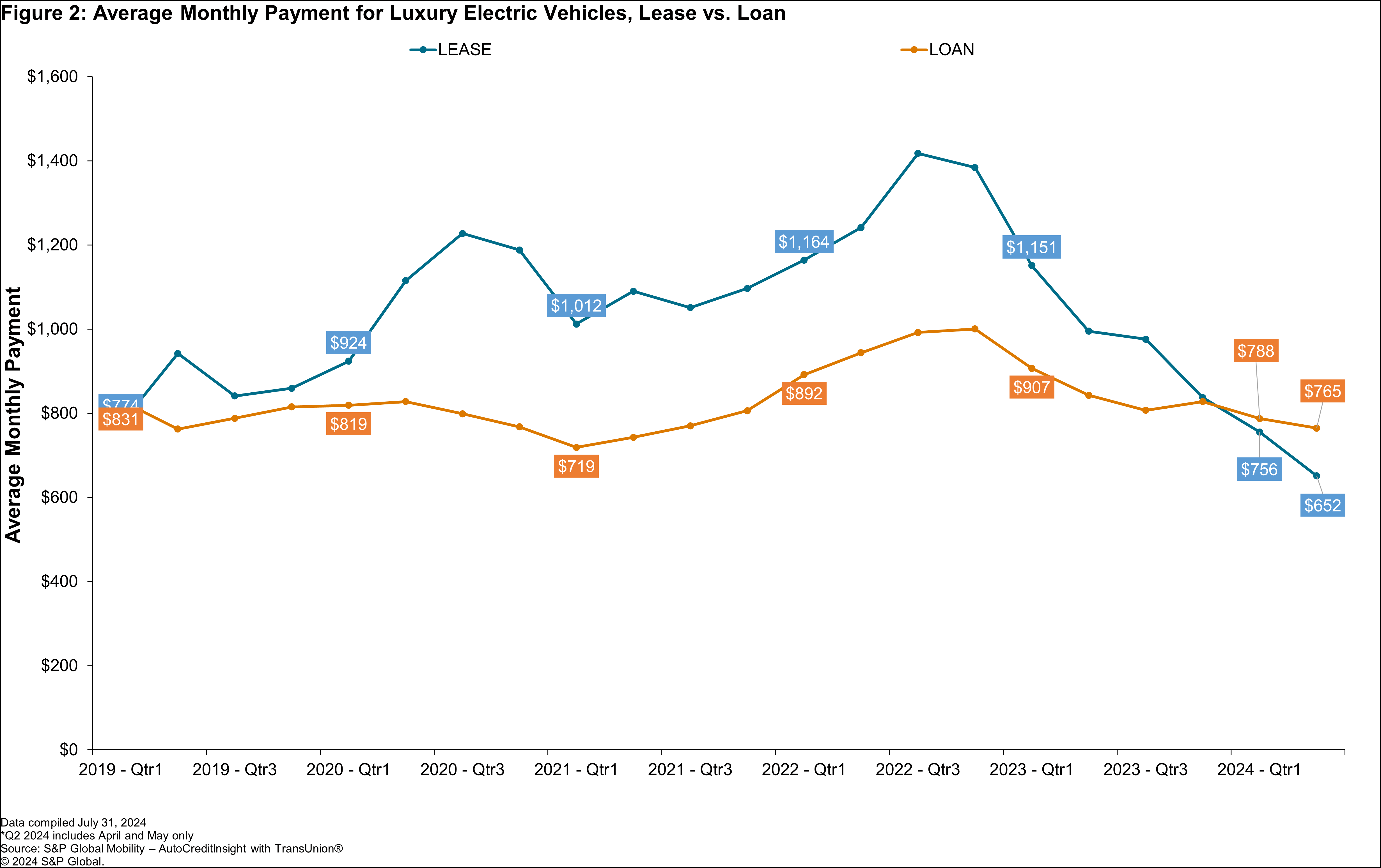
As Figure 2 demonstrates, lease payments for luxury EVs rose
substantially at the start of 2020 when the pandemic arrived and
stayed elevated through much of 2022. But, starting at the end of
2022 soon after the IRA went into effect, lease payments began to
decline both in absolute numbers and relative to loan payments.
And, in the first five months of this year, luxury EV lease
payments have fallen below loan payments (a more normal relative
position for them based on history).
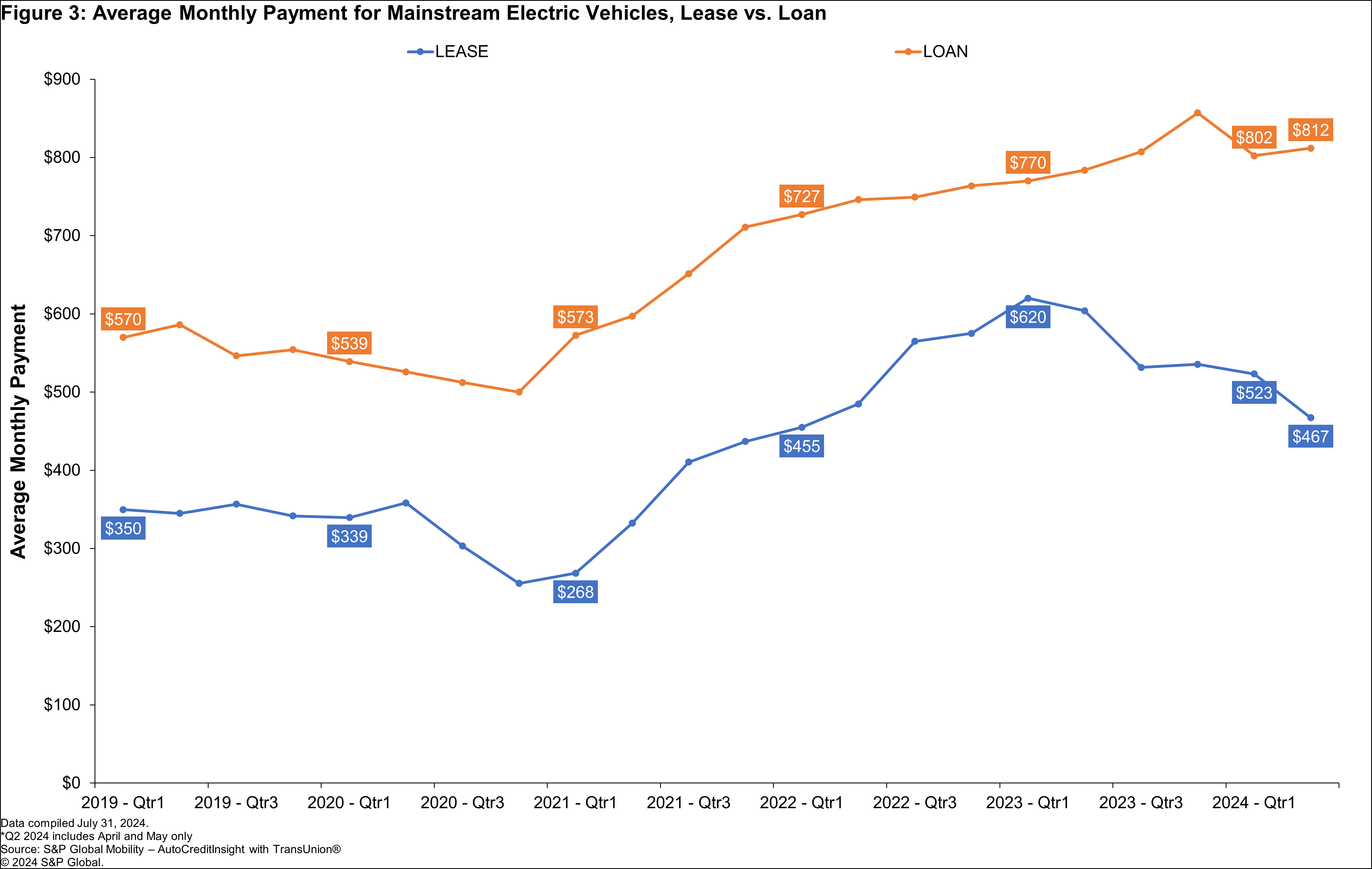
The same trends have occurred in the mainstream EV market, as
illustrated by Figure 3. In the mainstream space, EV lease payments
have been below loan payments throughout the displayed time period,
but the gap began to widen shortly after the IRA adoption date, and
since Q3 2023 the difference between the two metrics has increased
dramatically.
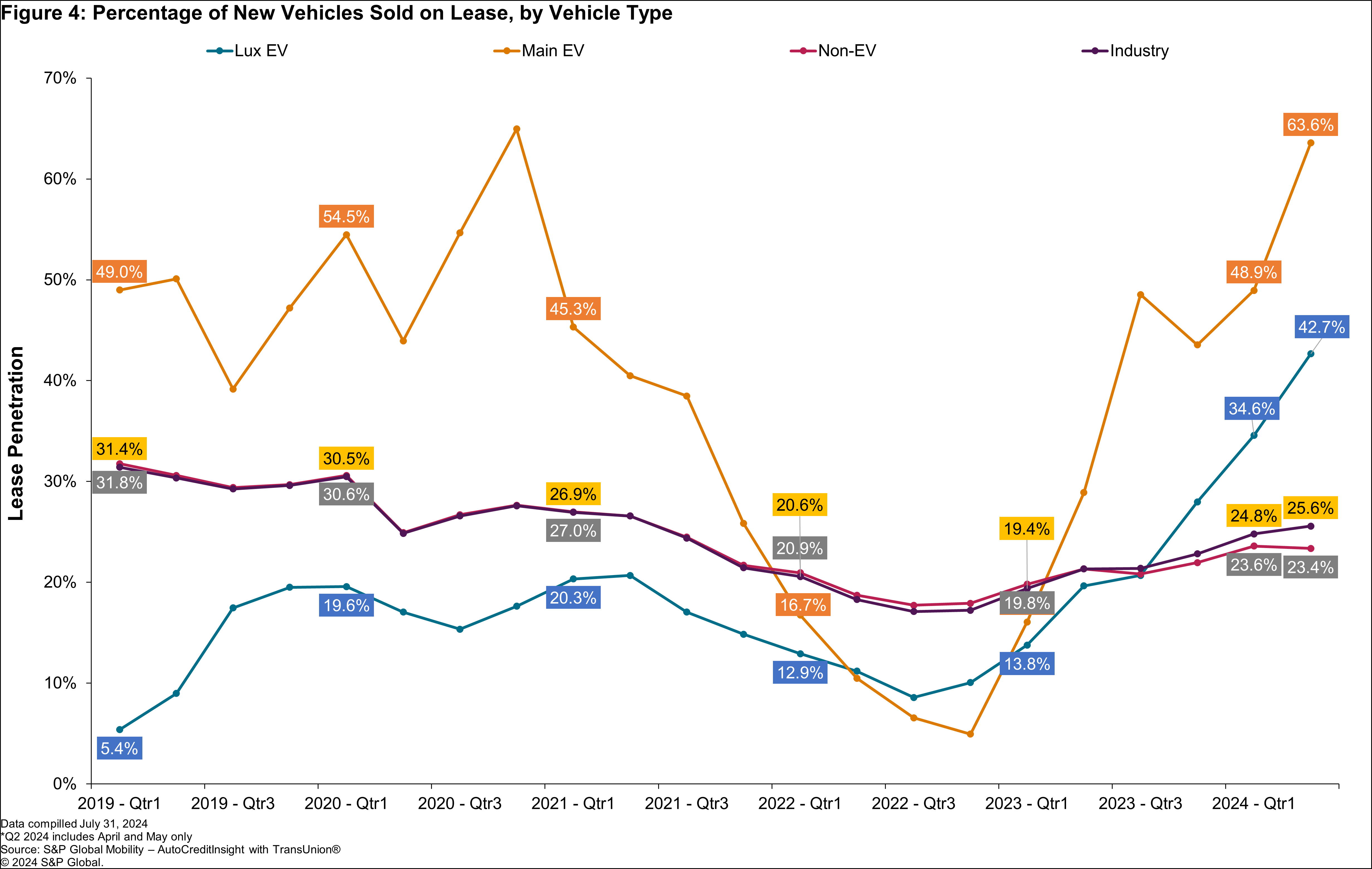
This increased value proposition of leasing EVs, relative to
purchasing them, understandably has driven lease levels to
exceptionally high levels. While industry-wide lease mix has only
risen slightly in the last several months, the EV lease mix among
mainstream products has climbed from 4.9% in Q4 2022 to 63.6% this
past April and May; similarly, lease penetration in the luxury EV
sector has jumped from 8.6% in Q3 2022 to 42.7% in April and
May.
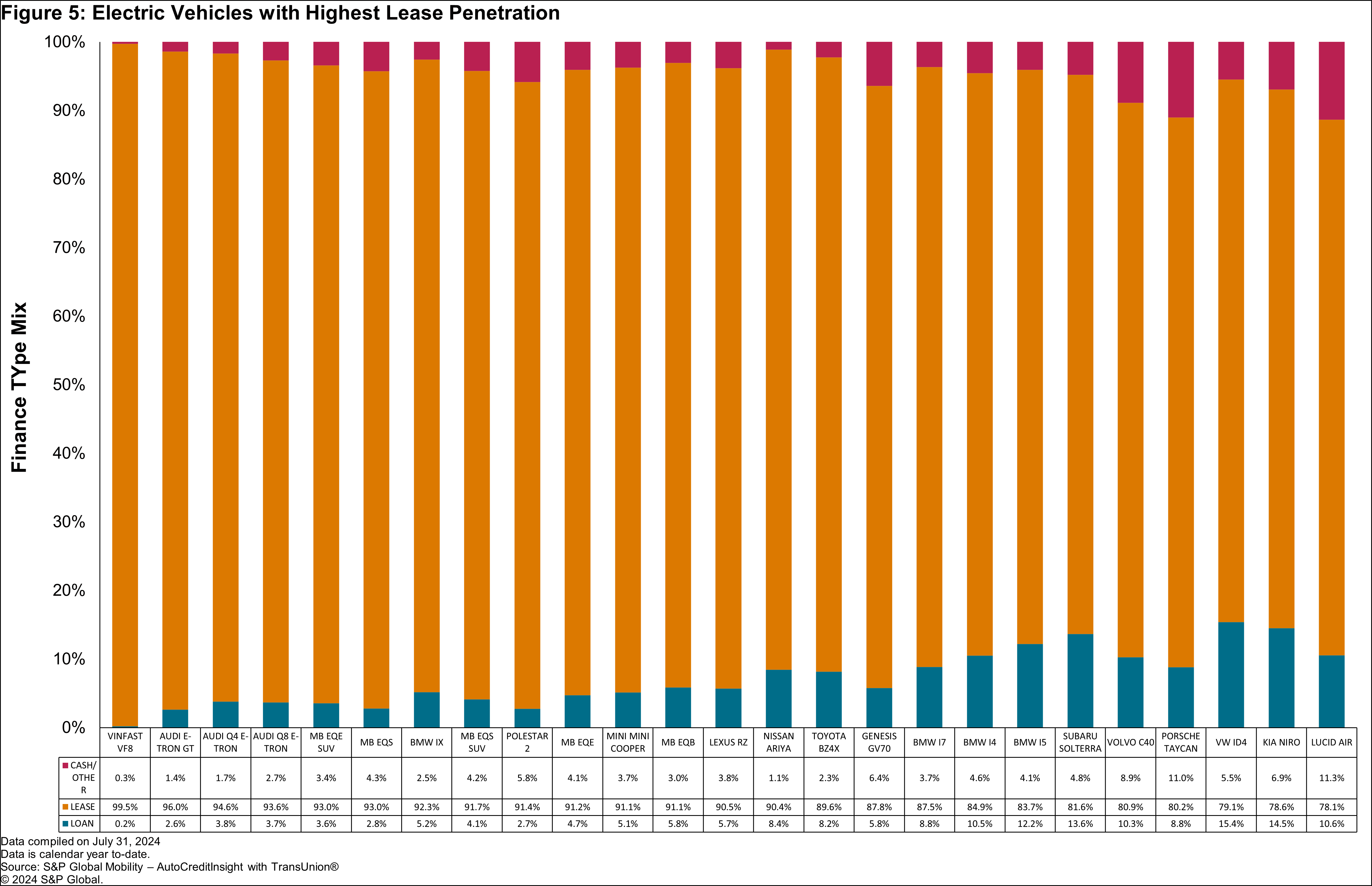
At the model level, these financing dynamics have brought some
extraordinary results. In the first five months of this year, 22
models, including 17 luxury models, had a lease penetration greater
than 80%, and 14 of these models enjoyed a lease mix above 90%.
While the luxury space traditionally has a higher lease mix than
the mainstream market, such a high number of models with
exceptionally high leasing business is rare.
These data point to at least three conclusions. An obvious one
is that if a brand wants to compete in the EV space, it needs to be
an aggressive player in the leasing business. Succeeding in this
endeavor requires an active, established, and competitive captive
finance source.
A second takeaway is that governmental regulations, whether at
the state or national level, can still be used to shift the market
in a direction favored by those in power.
And lastly, these data suggest that the EV market continues to
be in its early stages and therefore subject to rapid fluctuations
depending on regulations, incentives, new models, discontinued
models, other fuel type availability, and the final value
proposition for the consumer.
In partnership with TransUnion, S&P Global Mobility's
AutoCreditInsight™ is the most comprehensive, accurate and timely
vehicle registration and loyalty data with automotive loan
origination activity.