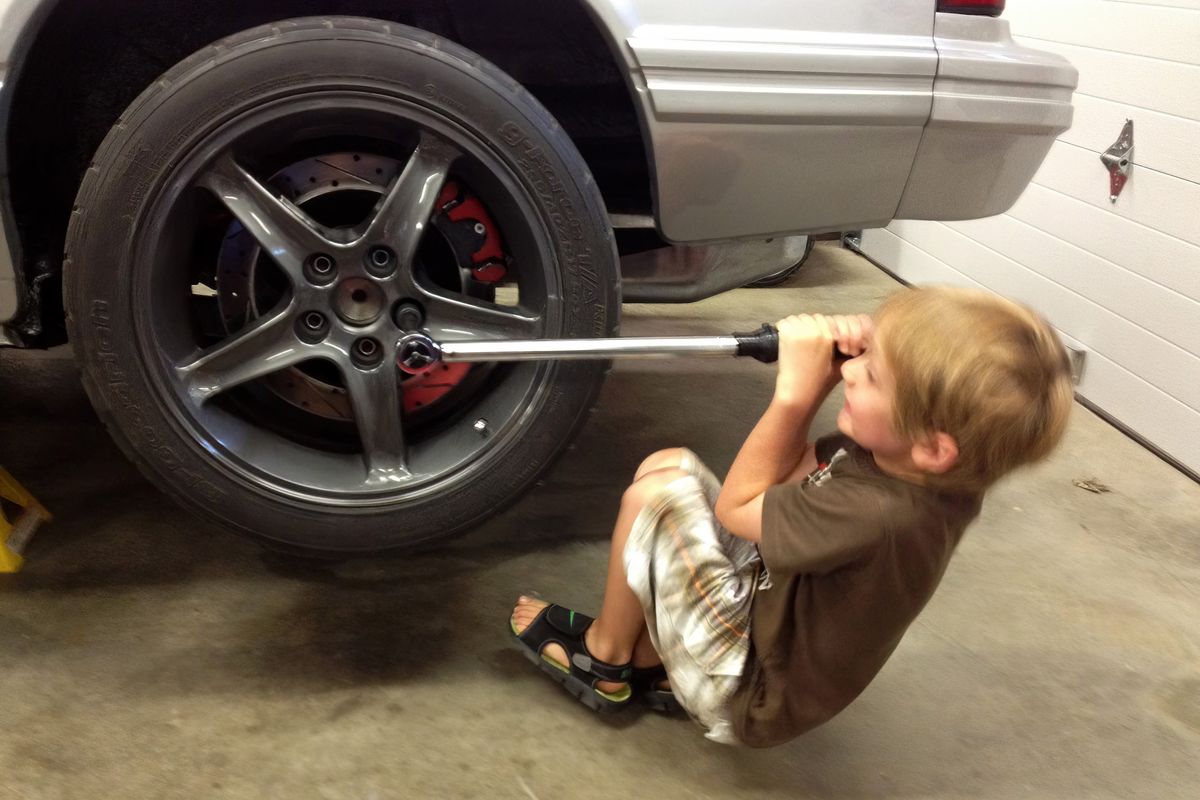
Something a lot of weekend wrench-spinners overlook is “torquing” their nuts and bolts. Torque values for fasteners are called out in every shop manual…but does bolt torque matter? The answer may surprise you.
When tightened, fasteners act like a spring that squeeze two surfaces together to keep them from pulling apart (tension) and/or sliding past each other (shear). The key to understanding this concept is fasteners can handle about twice as much force when loaded in tension than in shear! That’s why critical engine fasteners such as connecting rod bolts and head studs are loaded in tension.
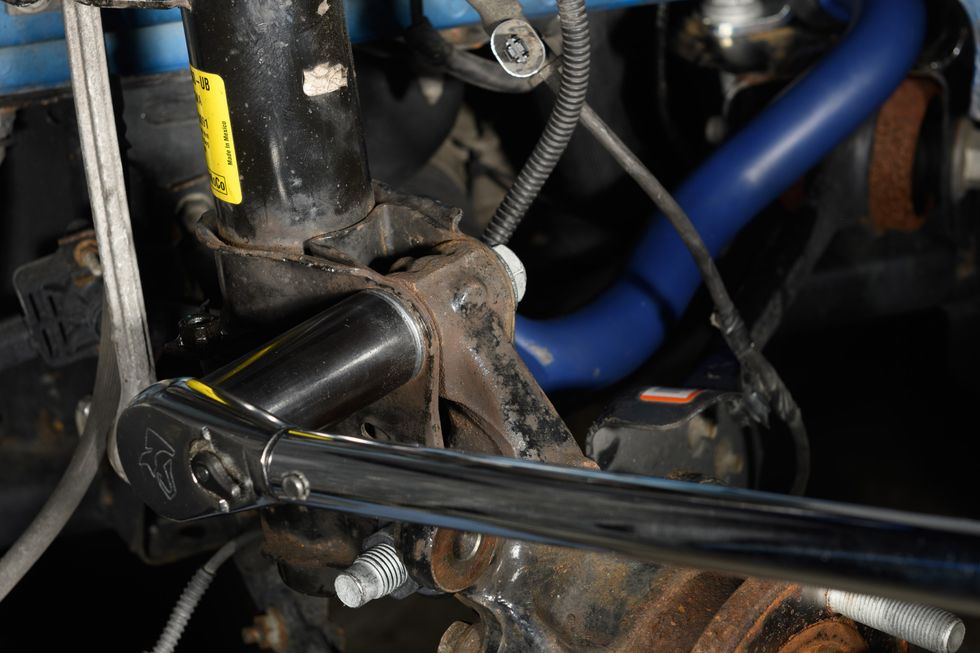
However, many fasteners on our cars are tasked with keeping parts from sliding past each other (wheel studs or strut bolts, for example), so how do we keep them from sliding? Making sure the bolts are tight enough! When a properly sized bolt is torqued to specification, the surfaces don’t slide, and the bolt is only loaded in tension (where it’s strongest). If the surfaces slide, the fastener is loaded in shear, and it can fail. As long as the static friction between the parts is greater than the shear force, the fastener is always loaded in tension…but if the fastener isn’t torqued enough and the parts slide, the fastener can break…and bad things happen.
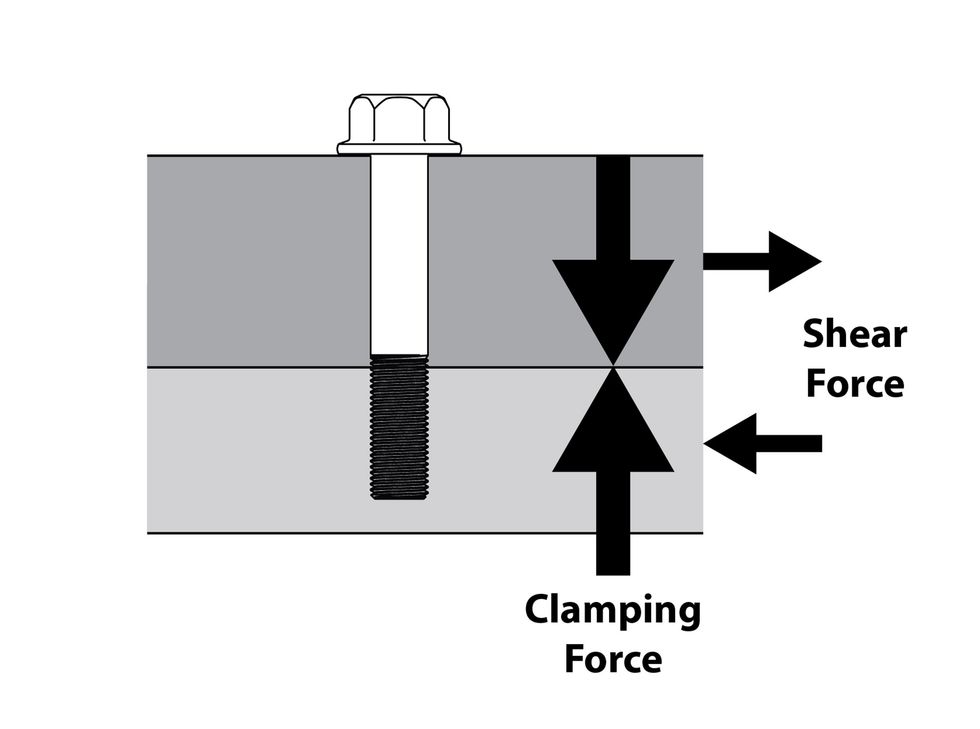
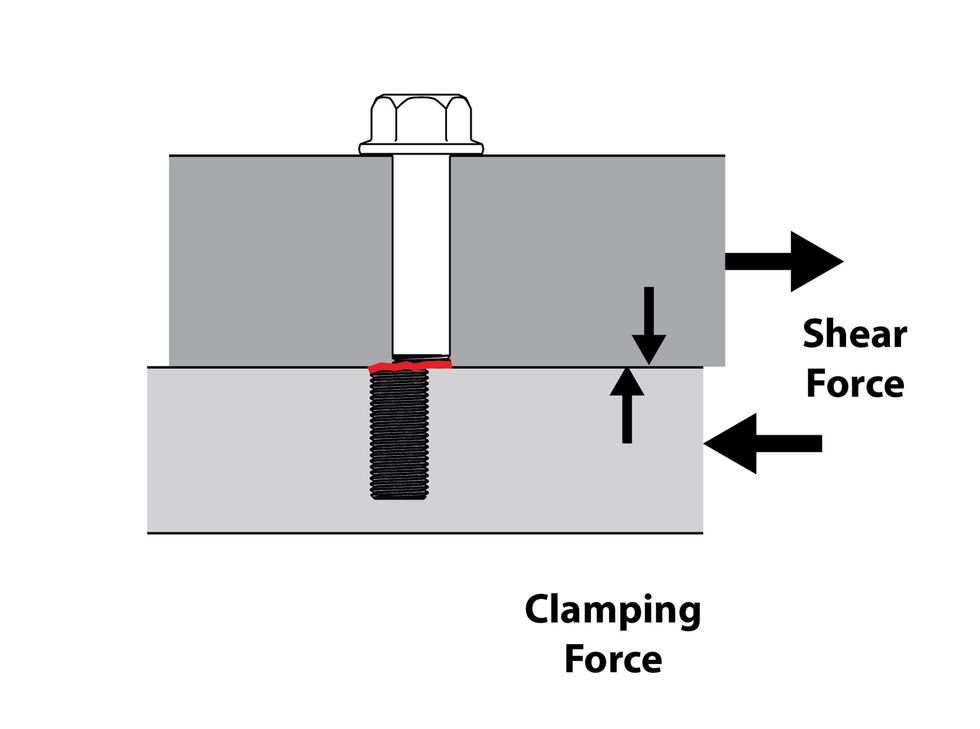
So, how to measure bolt tension to make sure it’s clamping the parts tightly enough? If we treat fastener like a stiff spring, we can estimate the fastener’s tension by measuring torque or stretch. Torque is more convenient, but stretch is more accurate.
Measuring Fastener Tension Via Torque
It’s not always possible to measure how much a fastener stretches when installed (e.g., fasteners installed in blind holes). Using a torque wrench to measure how much installation torque is needed is much more convenient. However, since we’re using the installation torque required to achieve an estimated amount of tension, there’s more variables. Friction is the biggest factor, as installation torque assumes a certain level of friction between the fastener and the things being clamped. Too much friction, and the bolt isn’t stretched enough; not enough friction, and the bolt could be overstretched.
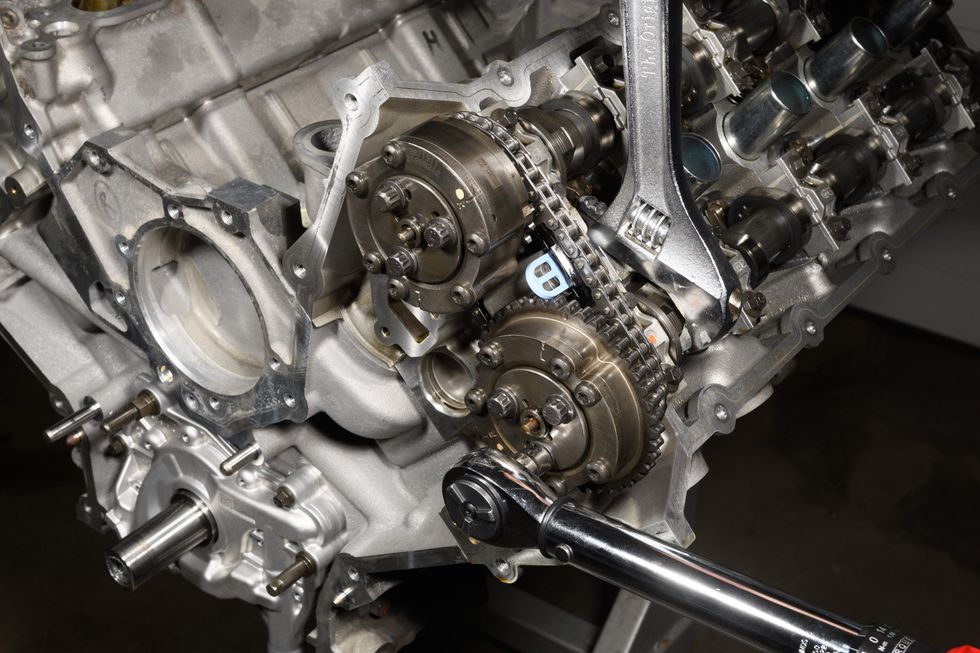
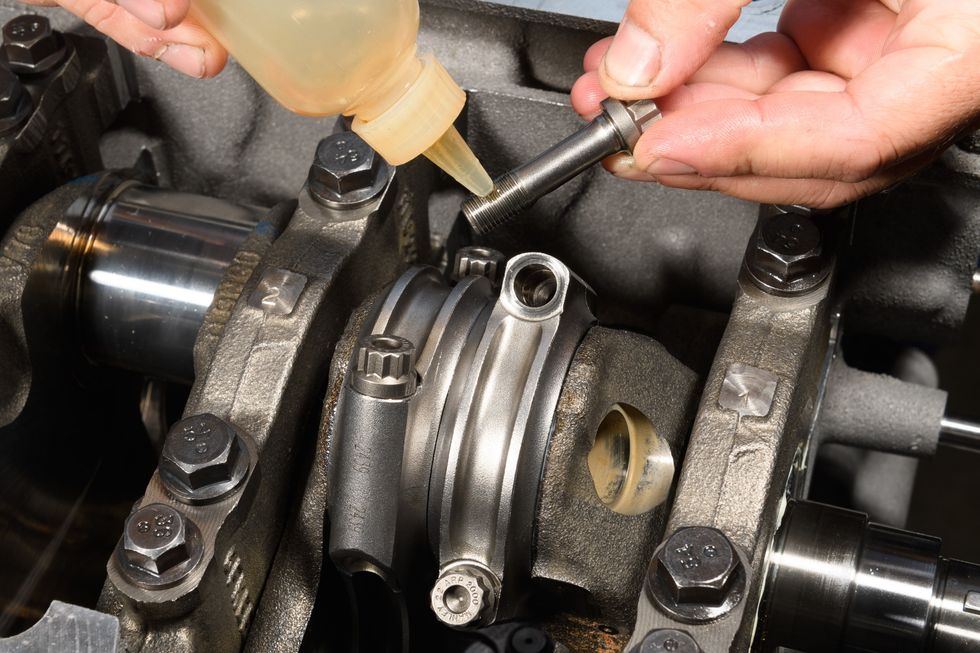
What about oil, anti-seize compound, or moly lube? The best rule of thumb is to avoid using any lubricant under the head of the bolt, and just keep lubrication on the threads. (Caveat: ARP often calls for engine oil or their own moly lubrication to be used under their bolt or nut heads, but they specify a unique torque value in these cases.)
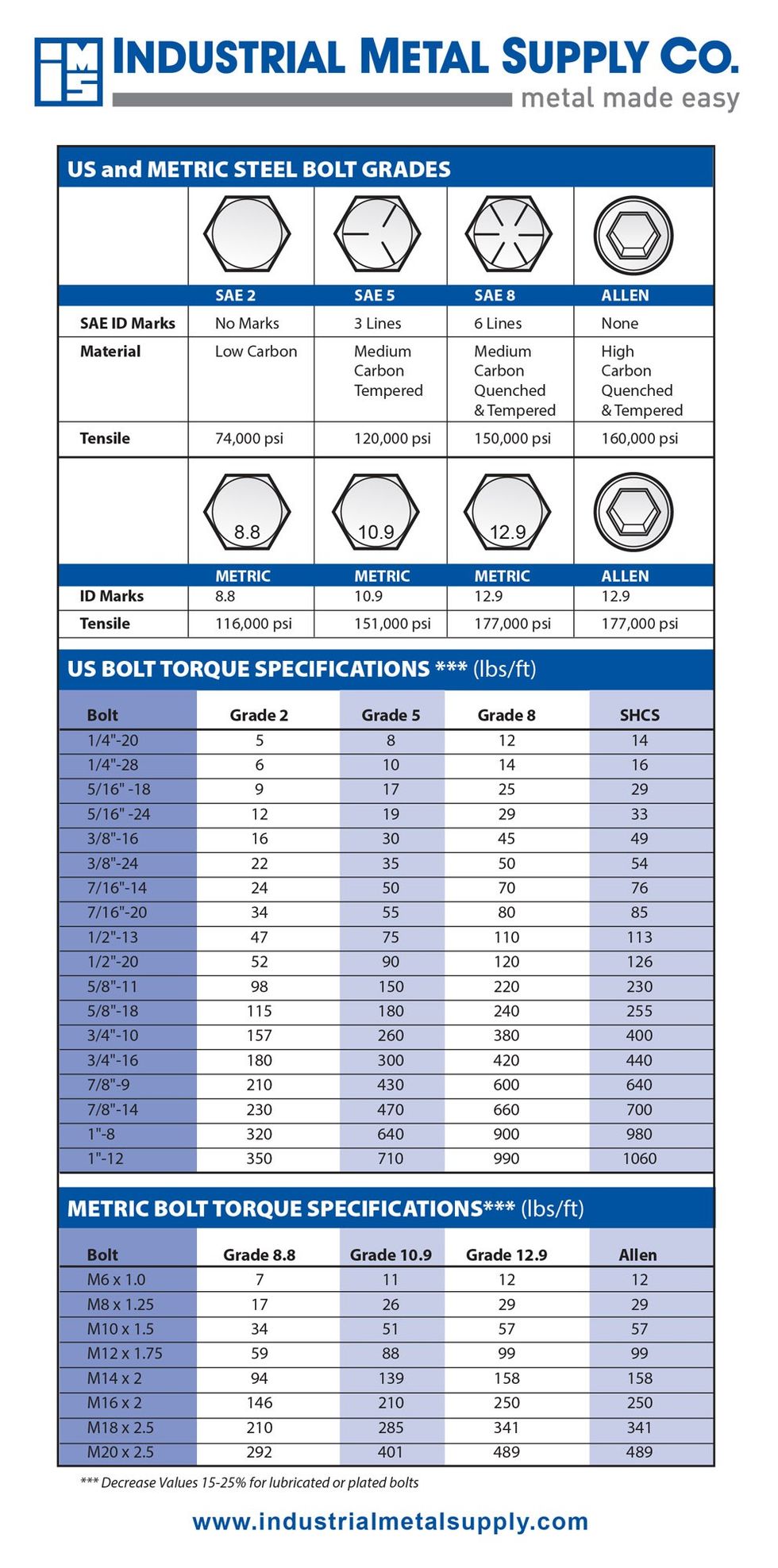
Newsflash: “face-shaking tight” is not a torque value. If you have a shop manual for your vehicle, refer to it for torque specs. Otherwise, you can use the following guide for torque based upon fastener material and thread pitch.
Torque Tip: Static friction is higher than sliding friction, so try to reach the desired torque spec while turning the fastener. Stopping and starting while torquing a bolt could give you a false reading.
Measuring Fastener Tension via Stretch
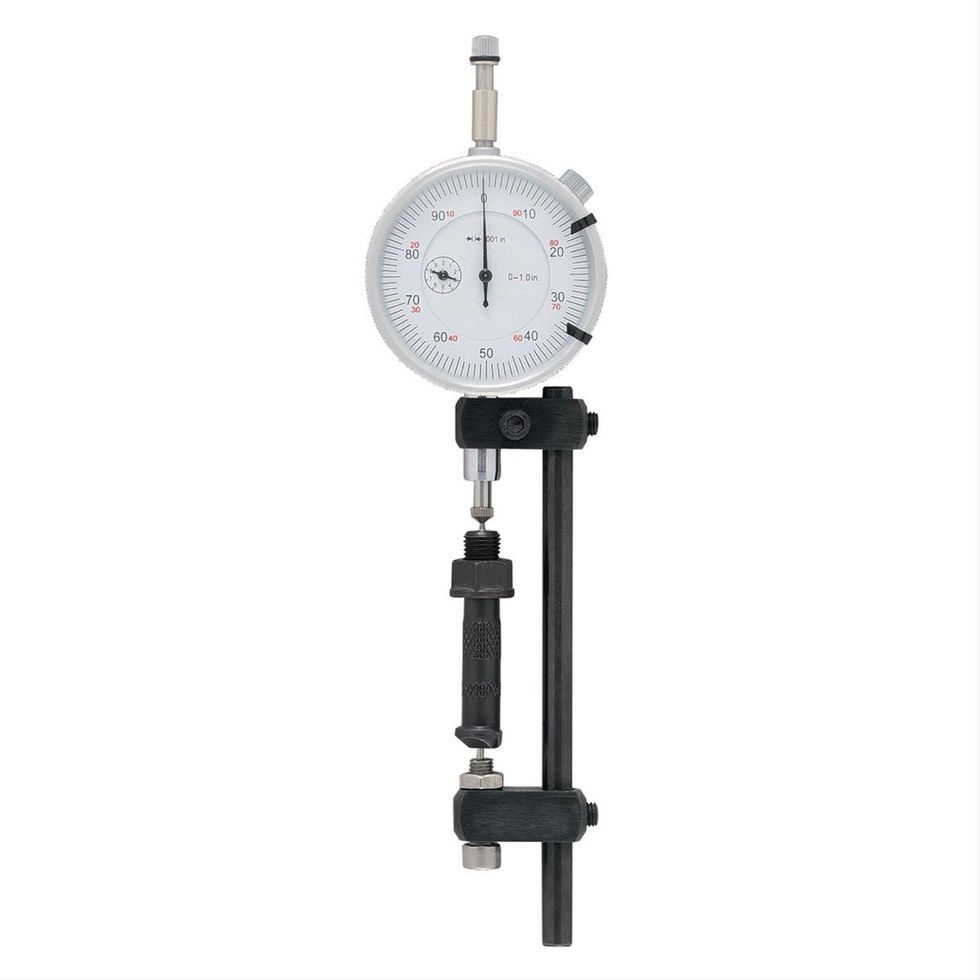
A better way to determine bolt tension is to measure how much it stretches when installed. This isn’t as convenient, but it’s common practice for critical fasteners such as connecting rod bolts. ARP makes a bolt stretch gauges for their rod bolts that are accurate and easy to use.
Fastener Material
You’ll notice that both SAE and metric fasteners have “grades” or “classes.” This refers to the ultimate strength of the bolt based upon its material and treatment. Unmarked SAE bolts are Grades 1 or 2. For critical installations, stick with Grade 5 or Grade 8, with the former usually more than adequate for most situations. For example, using a Grade 8 bolts to assemble sheet metal is overkill.
If you’re working on vehicles that are younger than you, the fasteners are likely metric. Medium-strength metric fasteners are usually Class 8.8, and critical fasteners are Class 10.9. If an OEM uses a Class 10.9 fastener, it’s doing something important so make sure you check the proper torque spec and replace the bolt if the bolt looks questionable.
Torque To Yield Fasteners
Many OEM fasteners are “torque to yield,” in that they’re overstretched to ensure that the proper clamp load is achieved during assembly. These fasteners are usually designed to be discarded after one use. Modern cylinder head bolts are a perfect example. “Can I reuse torque to yield cylinder head bolts?” No, it’s not worth it. When in doubt, throw it out. The cost for new bolts is less than a blown head gasket…or worse!
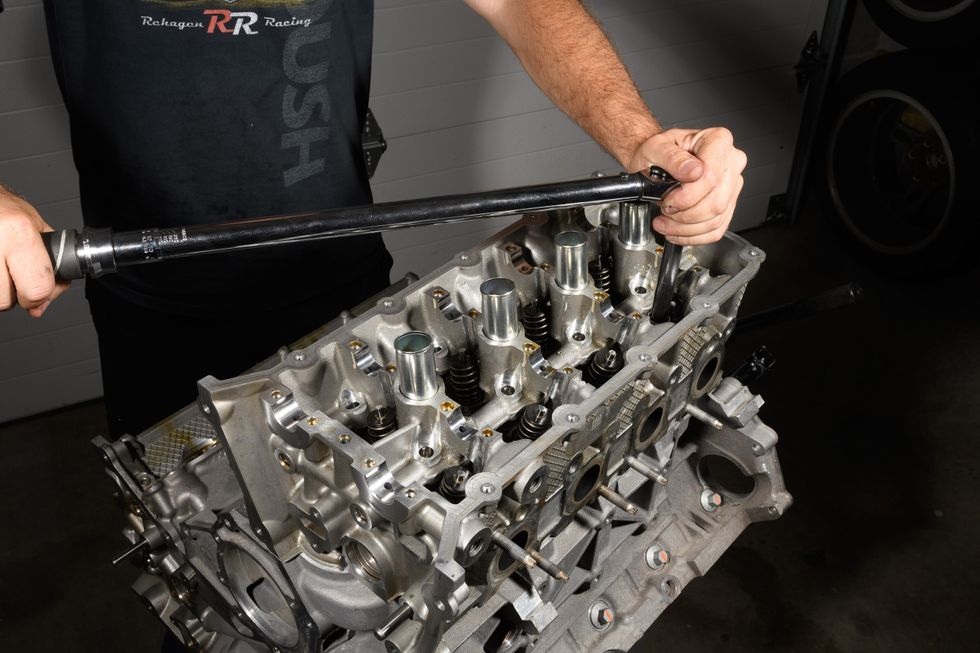
Torque To Angle Fasteners
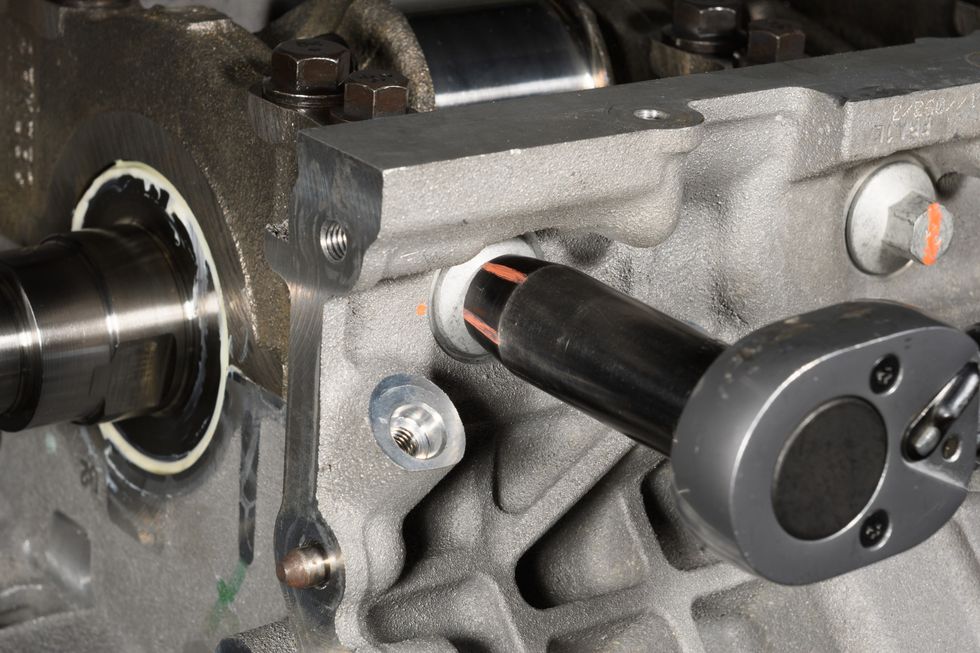
Some OEMs call for a torque value plus an additional angle (e.g., “50 lb-ft, plus 45 degrees”). If you don’t have a special angle tool, use paint marks on a socket for reference when torquing to an angle spec.
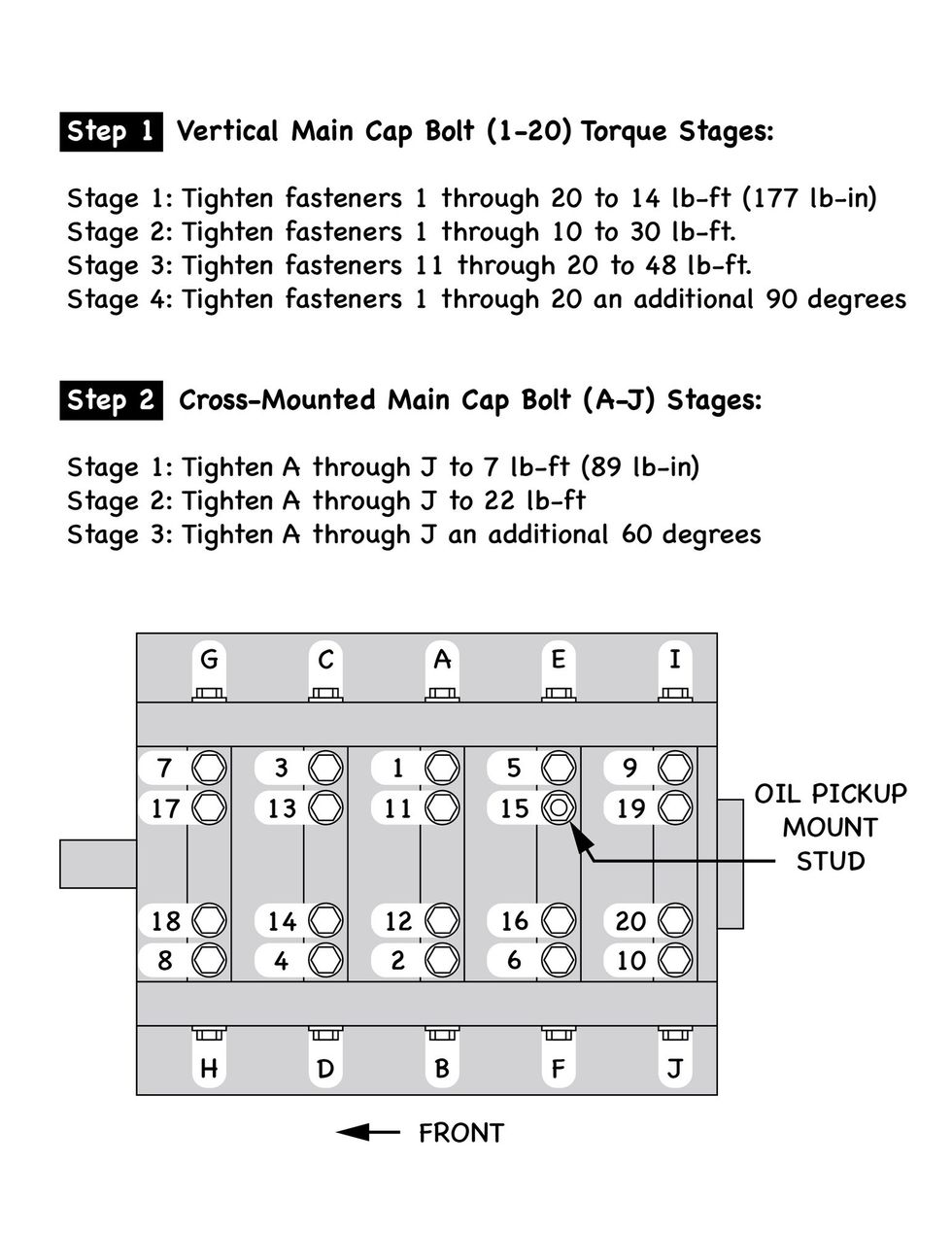
Torque Steps And Sequence
Large components (especially those with sealing surfaces and gaskets) need to be clamped down evenly or they can warp, leak, crack… or a combination of all three! Manufacturer assembly lines that call for multiple fasteners have a machine that torques them down simultaneously. Cool, but the rest of us peasants don’t have that, so we must tighten things like intake manifolds and cylinder heads in a sequence (and additionally in steps) to preserve surface flatness and sealing integrity.
Check your vehicle’s shop manual for recommended torque sequences and steps. If you don’t have one, use common sense and start at the center of the component and crisscross your way outward. Go in steps by starting with finger tight, then a portion of the final torque value, and finish up with the torque spec.
Commercials Cooperation Advertisements:
(1) IT Teacher IT Freelance

立刻註冊及報名電腦補習課程吧!
电子计算机 -教育 -IT 電腦班” ( IT電腦補習 ) 提供一個方便的电子计算机 教育平台, 為大家配對信息技术, 電腦 老師, IT freelance 和 programming expert. 讓大家方便地就能找到合適的電腦補習, 電腦班, 家教, 私人老師.
We are a education and information platform which you can find a IT private tutorial teacher or freelance.
Also we provide different information about information technology, Computer, programming, mobile, Android, apple, game, movie, anime, animation…
(2) ITSec

www.ITSeceu.uk
Secure Your Computers from Cyber Threats and mitigate risks with professional services to defend Hackers.
ITSec provide IT Security and Compliance Services, including IT Compliance Services, Risk Assessment, IT Audit, Security Assessment and Audit, ISO 27001 Consulting and Certification, GDPR Compliance Services, Privacy Impact Assessment (PIA), Penetration test, Ethical Hacking, Vulnerabilities scan, IT Consulting, Data Privacy Consulting, Data Protection Services, Information Security Consulting, Cyber Security Consulting, Network Security Audit, Security Awareness Training.
Contact us right away.
Email (Prefer using email to contact us):
SalesExecutive@ITSec.vip